
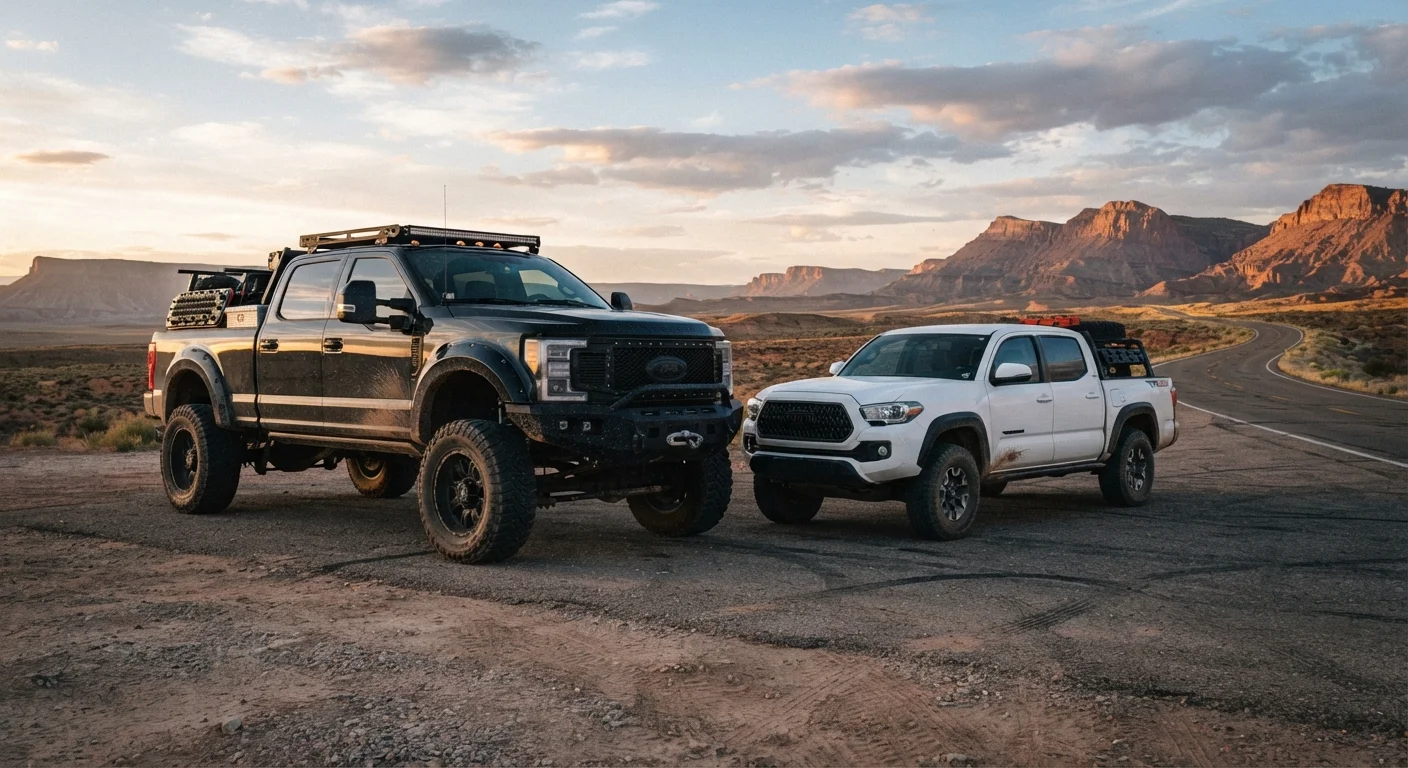
How the Truck Segment Is Divided
In the US market, pickups are broadly grouped into two mainstream retail segments: mid-size and full-size. Beyond those sit heavy-duty trucks (classified as HD or ¾-ton and 1-ton), but for most everyday buyers, the choice lands between these two civilian segments. Understanding how they differ starts with knowing what each segment is actually built to do.
Mid-size pickups — sometimes loosely called "compact" by older buyers — typically ride on wheelbases ranging from roughly 110 to 126 inches and carry payload ratings generally between 1,000 and 1,500 pounds. Full-size pickups (half-ton trucks, or Class 1500/150/1500 depending on manufacturer nomenclature) use longer wheelbases, wider frames, and larger engines, commonly achieving payload ratings of 1,500 to over 2,200 pounds on properly configured trims. For a broader look at how segment labels are determined by physical dimensions, see how those measurements translate into real-world differences.
| Criterion | Mid-Size Pickup | Full-Size Pickup |
|---|---|---|
| Typical Max Towing | ~7,700–8,500 lbs | ~10,000–14,000 lbs |
| Typical Max Payload | ~1,000–1,500 lbs | ~1,500–2,200+ lbs |
| Overall Length (crew cab) | ~210–222 inches | ~230–250 inches |
| Fuel Economy (general range) | Slightly better on average | Slightly lower, varies by engine |
| Cab/Bed Config Variety | Moderate factory options | Wider factory matrix |
| Urban Maneuverability | Easier to park and navigate | More challenging in tight spaces |
| Engine Options | 4-cyl, V6, sometimes diesel | 4-cyl turbo, V6, V8, diesel |
Towing and Payload: Where the Numbers Diverge Most
Towing capacity is arguably the sharpest dividing line between these segments. Mid-size pickups, when properly equipped, generally max out in the 6,000–7,700 lb towing range, though some configurations push toward 8,000–8,500 lbs. Full-size half-tons, again depending on engine, axle ratio, and towing package, are commonly rated between 10,000 and 14,000 lbs — a difference that matters enormously when the trailer gets heavy.
Payload capacity — the weight of cargo and passengers the bed and frame can legally and safely carry — tells a similar story. Mid-size trucks can handle substantial loads for most recreational purposes, but full-size trucks provide the headroom needed when job-site materials or combined cargo-plus-passenger weight is high.
~6,000 lbs
Typical mid-size tow ceiling (base config)
Entry-level mid-size truck configurations without a tow package commonly start around this rating before options are added.
~2,200 lbs
Top payload ratings in full-size segment
Certain work-focused full-size half-ton configurations achieve payload ratings at or above this threshold depending on cab, bed, and powertrain choices.
~20 inches
Typical length difference between segments
A full-size crew cab with a standard bed is commonly 18–22 inches longer overall than a comparable mid-size crew cab, a gap clearly felt in parking scenarios.
One important clarification: tow ratings are highly configuration-dependent. A full-size truck without a factory tow package will have a lower rating than one with it. Always consult the truck's actual build-spec tow chart, not just the headline number in an advertisement.
Cab Configurations, Bed Lengths, and Daily Drivability
Both segments offer multiple cab styles — extended cabs (sometimes called access cabs or king cabs) and crew cabs with four full doors. Full-size trucks, however, tend to offer a wider matrix of cab-and-bed combinations from the factory, including long-bed crew cab configurations that mid-size trucks rarely match.
Daily drivability is where mid-size trucks genuinely earn their audience. Overall vehicle length for a mid-size crew cab typically runs in the 210–220 inch range; a comparable full-size crew cab with a standard bed can easily exceed 230 inches. That difference shows up immediately in parking lots, narrow urban streets, and multi-story garages. Daily driving a pickup truck involves more trade-offs than most buyers expect — and segment choice shapes those trade-offs significantly.
Tow and Payload Ratings Are Legal Limits
Manufacturer tow and payload ratings aren't merely suggestions — exceeding them can compromise vehicle control, damage drivetrain components, and create liability exposure in the event of an accident. Always verify the specific rating for your truck's actual configuration using the door-jamb payload sticker and the build-specific tow guide, not segment-level averages.
Fuel economy has historically favored mid-size trucks, though the gap has narrowed as full-size trucks adopted turbocharged four- and six-cylinder options alongside their V8s. Modern diesel powertrains in both segments can also change the efficiency calculus, particularly for drivers who rack up highway miles.
Matching Segment to Real-World Need
The practical question isn't which segment is objectively better — it's which one fits your actual use pattern. If your heaviest regular task is carrying landscaping materials on weekends or towing a small boat to a lake, a mid-size truck covers those duties without the bulk of a full-size. If you're pulling a loaded horse trailer weekly, hauling equipment for a trade, or regularly transporting a full crew plus gear, full-size specifications give you the margins you need to operate safely and legally within ratings.
Buyers who are also weighing non-truck alternatives may find it useful to compare how truck utility stacks up against the SUV segment — understanding how SUVs are segmented can help clarify where a truck is genuinely necessary versus where a large SUV might serve the same role. For a broader orientation across all vehicle segments, the Vehicle Segments reference guide provides a complete market overview.