
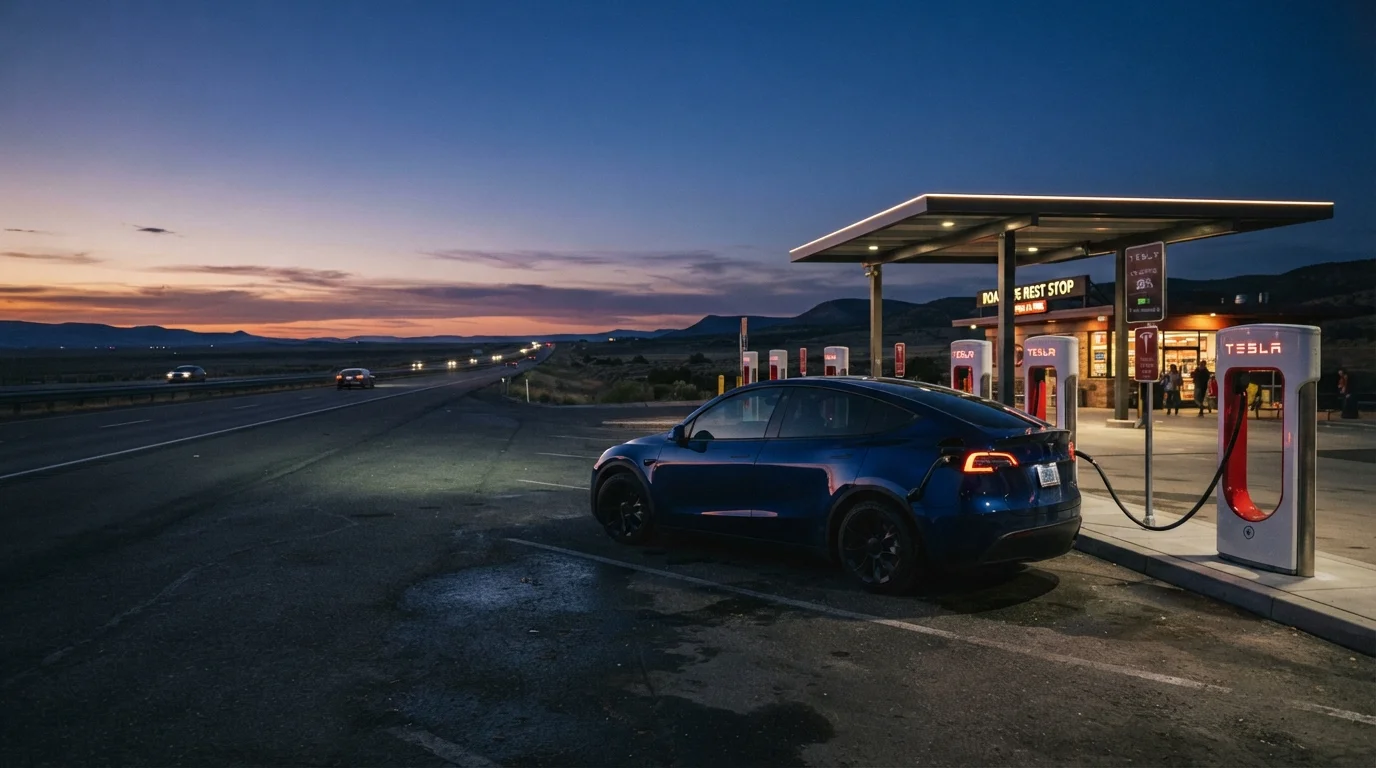
Why Road Trip Charging Feels Stressful — And How Planning Fixes It
Range anxiety on a long trip is almost always a planning problem, not a technology problem. The drivers who find EV road trips stressful are typically the ones who treat charging like a gas station fill-up — reactive, unplanned, and decided only when the fuel gauge gets low. EV charging rewards a different mindset: one built around predictable stops, known locations, and a bit of pre-departure homework.
Understanding the type of charger you'll use is foundational. AC vs DC charging shapes every aspect of road trip planning — from how long you'll stop to which stations are even worth targeting. Once that's clear, the logistics become manageable.
What you will need
The steps below walk through a repeatable planning process that works whether you're driving 200 miles or 600.
Step-by-Step: Mapping Your Charging Route
EV-specific route planner (e.g., ABRP, PlugShare, or built-in nav)
Calculates charging stops based on your vehicle model, current battery level, and real-world consumption.
Charging network app or RFID card
Authenticates and initiates charging sessions at public stations along your route.
Backup payment method (credit card)
Some chargers require a credit card tap if network apps fail or connectivity is poor.
Establish your real-world range baseline
Start with your vehicle's EPA-rated range, then apply a realistic adjustment. Cold weather, highway speeds above 70 mph, cargo weight, and climate control use can reduce effective range by 15–30%. A vehicle rated at 300 miles of EPA range may deliver closer to 220–240 miles in winter highway conditions. Use this adjusted figure — not the EPA number — as your planning range for each leg of the trip.
Identify DC fast charger locations along the route
For any trip longer than your single-leg range, DC fast charging (Level 3) is the only viable option on the road. AC vs DC charging works very differently, and a Level 2 charger at a rest stop will add only 15–25 miles per hour — impractical for a highway stop. Enter your route into an EV-aware planner and filter for DC fast chargers compatible with your vehicle's connector (CCS, NACS, or CHAdeMO). Note station power output: a 350 kW charger will replenish significantly faster than a 50 kW unit, though your vehicle's onboard charger acceptance rate caps actual speed.
Space stops to keep state of charge between 10% and 80%
Lithium-ion battery charging slows considerably above 80% state of charge (SoC) — the battery management system throttles input to protect cell health. Plan each leg so you arrive at the charger with roughly 10–15% remaining and depart at 80%. This keeps you within the fastest portion of the charging curve and minimizes time spent at the station. If a leg would push arrival SoC below 10%, shorten that leg by adding an intermediate stop.
Build in a range buffer for each leg
Add a 15–20% buffer on top of your planned arrival SoC. Unexpected detours, construction-forced rerouting, or a headwind can consume more energy than anticipated. If your adjusted range suggests you can comfortably reach a charger, that means you have margin — not that you should push the limit. Route planners with live traffic integration will recalculate dynamically, but a mental buffer keeps you from relying entirely on optimistic projections.
Check real-time charger availability and identify a backup
Before each charging stop, verify availability using PlugShare or your network's app. First-time EV drivers often underestimate how frequently public chargers can be occupied or out of service. Identify a secondary charger within 10–15 miles of each planned stop. This takes 60 seconds of preparation and eliminates the most stressful scenario: arriving at a charger on low battery only to find it occupied or faulted.
Use charging stops as structured breaks
A 20–30 minute charge at a DC fast charger aligns naturally with a restroom break, a meal, or a short walk. Treat the stop as built-in rest time rather than lost time. Many highway charging stations are located at travel plazas or near amenities precisely for this reason. Pre-conditioning your battery (warming or cooling it to optimal charging temperature) using the navigation destination input — available on many EVs — can further reduce the time you actually spend waiting at the charger.
Sync Your Plan With Smart Charging Habits
The same principles that protect your battery on daily drives apply on road trips. Frequent deep discharges and repeated 100% charges add cumulative stress to battery cells. Smart charging habits that protect your battery are worth reviewing before any extended journey so your long-term range is preserved, not just your immediate trip.
Avoid Arriving at a Charger Below 5% SoC
Some vehicles limit DC fast charging acceptance rate when the battery is critically low, as a protective measure — meaning a near-empty battery may actually charge more slowly at first. Arriving consistently below 5% also reduces the margin for equipment issues or a wait in a queue. Keep your arrival target at 10–15% as a firm floor, not a casual guideline.
Network Compatibility Varies — Verify Before You Go
Not every DC fast charger is compatible with every EV. Connector standards (CCS, NACS, CHAdeMO) differ by manufacturer and model year, and adapter availability varies. Confirm your vehicle's connector type and verify that your planned stations support it before departure. Discovering an incompatibility at a charging stop with 8% battery remaining is an avoidable situation with five minutes of pre-trip research.
Once you've completed a trip or two using this framework, the process becomes second nature. Many EV drivers report that structured charging stops — paired with amenities at highway plazas — make longer drives feel less fatiguing than comparable gas-vehicle trips with fewer, rushed stops.
For context on what to expect from the broader public charging landscape, common public charging misunderstandings are worth reviewing before your first long haul. And if you're still deciding how home and public charging fit together day-to-day, home charging vs public charging considerations offer useful framing for your overall charging strategy.