
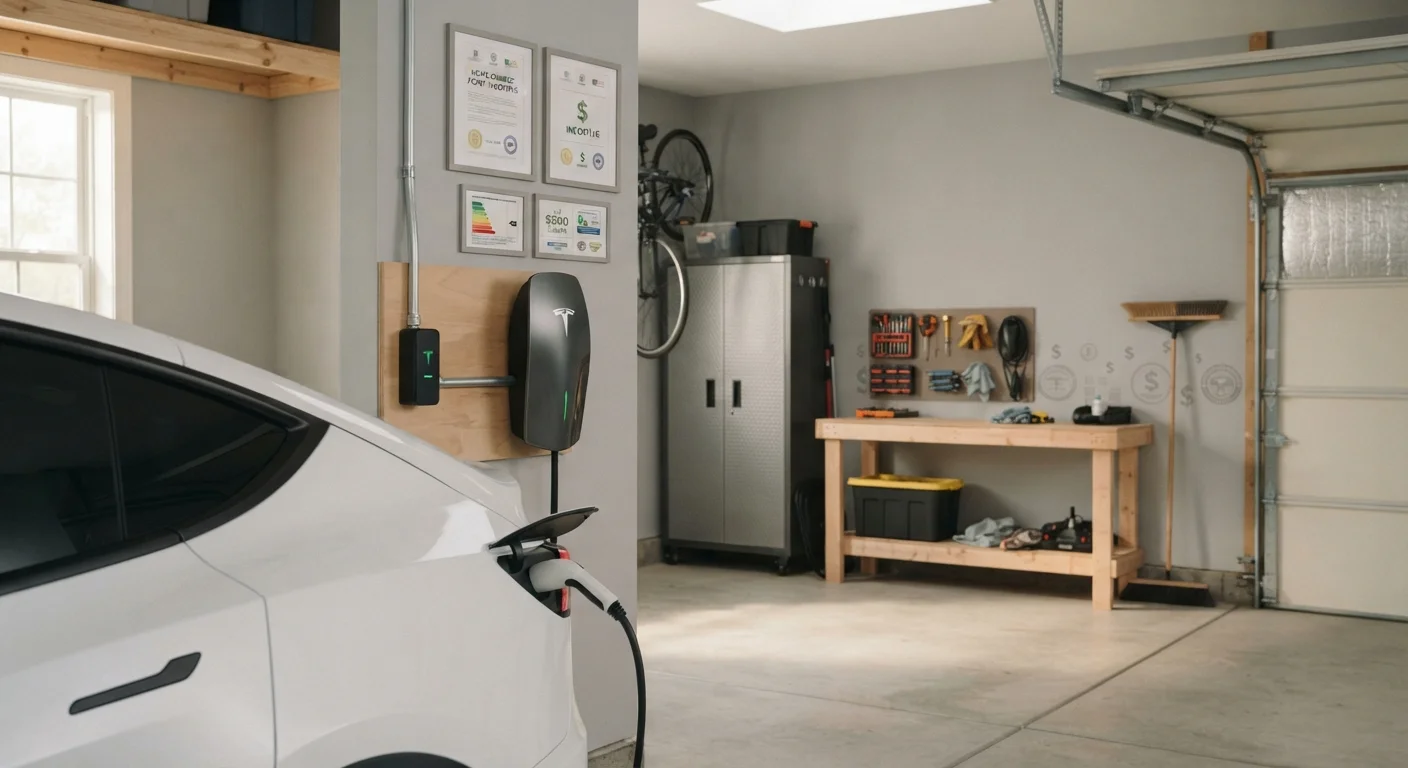
What Financial Support Is Available for EV Charging?
Installing EV charging equipment — whether at home or in a shared property — involves upfront costs that go beyond the charger unit itself. Wiring upgrades, panel work, and permitting can add hundreds of dollars to a basic home installation. A layered set of federal, state, and utility programs exists specifically to reduce those costs, and understanding how they stack is essential before you commit to a setup.
| Federal tax credit for home charger installation | Up to 30% of cost, max $1,000 per residence (IRS Section 30C, as amended by the Inflation Reduction Act (2022)) |
| Federal tax credit for business/commercial EVSE | Up to 30% of cost, max $100,000 per item of property (IRS Section 30C, as amended by the Inflation Reduction Act (2022)) |
| NEVI program total federal allocation | $5 billion over five years (Infrastructure Investment and Jobs Act, 2021) |
| States with utility EV charger rebate programs | 30+ states (U.S. Department of Energy Alternative Fuels Data Center) |
| Section 30C credit expiration | December 31, 2032 (IRS guidance on the Inflation Reduction Act provisions) |
| DOE tool for locating state incentives | Alternative Fuels Station Locator & Laws and Incentives database (U.S. Department of Energy) |
The three main sources of support are: federal tax credits, state-level grants and rebates, and utility company programs. Each has different eligibility rules, payout structures, and application processes. In many cases, you can combine them — but the rules around stacking vary, and claiming one program can sometimes affect your eligibility for another.
Before diving into installation logistics, it also helps to understand how your charging setup will work day-to-day. Our comparison of home and public charging options covers the practical trade-offs worth weighing first.
Federal Tax Credits: Section 30C Explained
The most broadly available federal incentive for EV charging equipment is the Alternative Fuel Vehicle Refueling Property Credit under IRS Section 30C, extended and modified by the Inflation Reduction Act of 2022.
EVSE
Electric Vehicle Supply Equipment — the technical term for EV charging hardware, including Level 1 and Level 2 home chargers and public DC fast chargers. Grants and tax credits typically reference EVSE when specifying eligible equipment.
Alternative Fuel Vehicle Refueling Property Credit
A federal tax credit under IRS Section 30C that offsets a percentage of the cost to purchase and install qualified EV charging equipment. It applies to both residential and commercial/business installations, with different caps and eligibility rules for each.
NEVI Formula Program
The National Electric Vehicle Infrastructure Formula Program, funded through the 2021 Infrastructure Investment and Jobs Act. It allocates federal funding to states to build out a national network of publicly accessible fast-charging stations, primarily along designated Alternative Fuel Corridors.
Alternative Fuel Corridor
A federally designated highway segment where the Federal Highway Administration requires publicly accessible EV fast-charging stations at specific intervals. Corridor designations guide where NEVI funds are deployed first.
Rebate
A direct cash-back payment offered after purchase and installation of qualifying equipment. Unlike a tax credit, a rebate does not require tax liability to receive its full value and is often administered by utilities or state agencies.
Tax Credit
A dollar-for-dollar reduction in the tax owed to a government body. For EV charging equipment, credits are calculated as a percentage of eligible costs, up to a statutory cap. Unused non-refundable credit amounts cannot be refunded as cash.
For residential installations, the credit covers 30% of the combined cost of purchasing and installing qualified EVSE, up to a maximum of $1,000 per residence. The equipment must be installed at your primary residence, and — as of 2023 guidance — the property must be located in an eligible census tract (a low-income community or non-urban area). This geographic requirement is new and narrows eligibility compared to the pre-2023 rules; verify your address qualifies before assuming you can claim the full amount.
For business and commercial installations — including apartment complexes, workplaces, and public-facing charging sites — the credit rises to 30% per item of property, capped at $100,000 per item. Additional wage and apprenticeship requirements apply to receive the full credit rate; a lower base rate applies if those labor conditions are not met.
The credit is non-refundable, meaning it can only reduce your tax liability to zero — it won't generate a refund if the credit exceeds what you owe. Carry-forward provisions may apply in some cases. Use IRS Form 8911 to claim it, and work with a tax professional to confirm your eligibility.
These Are General Education, Not Tax or Legal Advice
The incentive programs described here are general in nature. Tax credit eligibility depends on your individual tax situation, equipment choice, and installation circumstances. Consult a qualified tax professional or licensed electrician before making financial decisions based on any grant or credit program.
Programs Change — Always Verify Current Terms
Federal and state incentive programs are subject to legislative change, funding caps, and enrollment deadlines. Before purchasing or installing equipment, verify current eligibility requirements directly with the IRS, your state energy office, or your utility provider.
State, Utility, and Local Programs
Beyond the federal credit, more than 30 states offer their own EV charging incentives through state energy agencies, environmental programs, or public utility commissions. These range from direct rebates on EVSE purchase and installation to low-interest financing for electrical panel upgrades. California, New York, Colorado, and Massachusetts have historically offered some of the more robust state-level programs, but programs exist across most regions.
Utility companies are another major source of support. Many investor-owned and cooperative utilities offer:
- Equipment rebates — cash back on qualifying Level 2 charger hardware
- Installation rebates — offsetting electrician and wiring costs
- Time-of-use (TOU) rate plans — discounted overnight electricity rates that reduce ongoing charging costs significantly
- Make-ready programs — utility-funded electrical infrastructure for multifamily and workplace sites
The U.S. Department of Energy's Alternative Fuels Data Center maintains a searchable database of state and utility incentives — it's the most reliable way to identify what's currently active in your ZIP code.
If you live in an apartment or rented property, the incentive landscape is more complicated. Landlord consent, building electrical capacity, and program eligibility all interact. Our guide to charging in rented properties walks through the specific options available to non-homeowners.
Once you've mapped out available incentives, your next step is a practical home assessment. Check what your home needs before committing to a setup — from your fuse box to your driveway — to avoid surprises after purchase.
This article is for general informational purposes only and does not constitute tax, legal, or financial advice. Incentive programs are subject to change; always verify current eligibility with the IRS, your state energy office, or a licensed professional before making purchasing or installation decisions.