
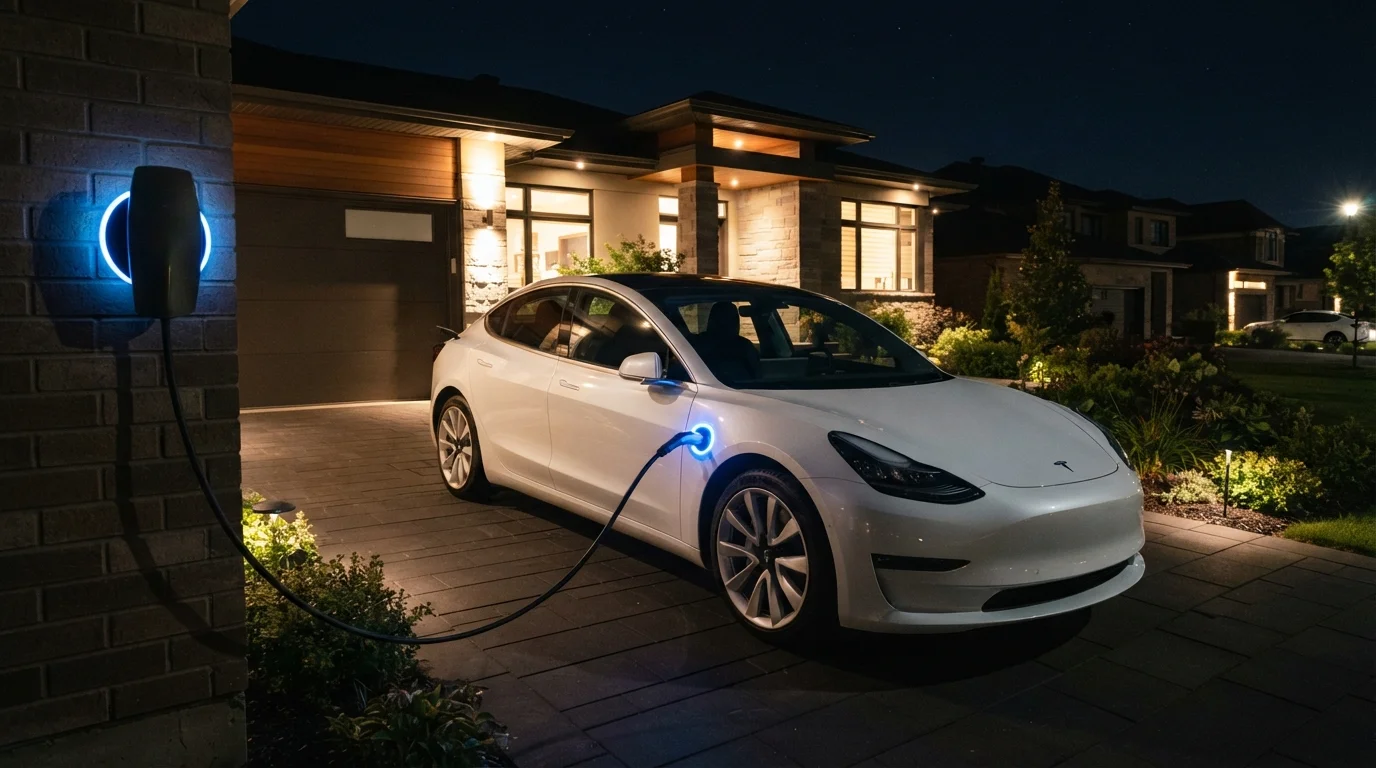
Why Charging Habits Matter More Than You Think
The battery pack in an electric vehicle is both its most valuable component and its most sensitive one. Unlike a gas tank, which simply empties and refills, a lithium-ion battery ages with every charge cycle — and how you charge matters as much as how often you do it.
Battery degradation is gradual and largely invisible until it starts trimming your usable range. The good news is that most degradation is preventable with a few consistent habits. These practices also intersect directly with your electricity bill, since when and how fast you charge affects both battery health and cost. For a broader foundation on EV ownership, see the EV Basics hub before diving in.
Set your daily charge limit to 80% for routine use
Lithium-ion cells experience accelerated stress when held at very high states of charge for extended periods. Charging to 80% instead of 100% reduces this strain and is widely recommended by automakers for everyday driving. Most modern EVs allow you to set a charge limit directly in the vehicle's settings menu.
Avoid regularly depleting the battery below 20%
Deep discharges — repeatedly running the battery close to 0% — place similar stress on cells as overcharging. Staying above 20% preserves the electrochemical structure of the cells over hundreds of cycles. Think of the 20–80% range as the battery's comfort zone.
Use DC fast charging selectively, not as your daily routine
DC fast charging (DCFC) delivers power at very high rates, generating heat inside the battery pack — a key driver of accelerated degradation. Level 2 AC charging, which typically runs at 7–11 kW, is gentler on cells and appropriate for daily home use. Reserve DCFC for road trips and situations where speed is genuinely necessary.
Schedule charging to run during off-peak electricity hours
Many utilities offer time-of-use (TOU) rate plans where electricity is substantially cheaper during overnight or early-morning hours. Scheduling your car to charge during these windows — rather than plugging in and starting immediately after work — can reduce your per-mile charging cost without any change to your driving routine.
Charge to 100% only before long trips, not as a habit
A full charge is occasionally necessary — particularly before a road trip where maximum range matters. The key is not to make it your default. Charge to 100% the night before a long journey, then resume your 80% limit for normal use. This gives you full range when needed without the cumulative wear of daily full charges.
The Core Practices That Protect Your Battery
The following habits are grounded in how lithium-ion chemistry actually behaves under real-world conditions. None require specialized equipment — just intentional use of the tools already built into your vehicle or charging app.
Use Your Vehicle's Built-In Charge Limit
Nearly every current EV and plug-in hybrid includes a charge limit setting in the infotainment system or companion app. Setting this once means you don't have to think about it daily — the car simply stops charging when it hits your chosen ceiling. Check your owner's manual for where this setting lives in your specific vehicle.
For a deeper look at how your electricity rate structure affects what you pay per charge, understanding time-of-use tariffs is essential reading alongside these habits.
Turning Good Habits Into Lower Bills
Battery-friendly charging habits and cost-saving strategies overlap more than most owners realize. Charging slowly overnight, staying off DC fast chargers for daily needs, and using scheduled charging to hit off-peak windows all serve both goals simultaneously.
It's also worth auditing your assumptions about charging costs. Public charging rates, for instance, can be significantly higher than home rates — a detail many buyers underestimate when projecting ownership expenses. See assumptions that can skew your EV cost calculations for a fuller breakdown. And if you're weighing how much to rely on home versus public infrastructure, home charging vs. public charging walks through the practical trade-offs.
~20%
Typical battery capacity loss after 100,000 miles
EPA and industry data suggest most modern EV batteries retain roughly 80% of original capacity at high mileage under normal use, though results vary by model and charging behavior.
30–50%
Potential savings charging off-peak vs. peak hours
Depending on local utility rates, time-of-use plan structures can reduce per-kWh costs by this margin during overnight windows compared to peak evening hours.
This article is for general informational purposes only. Actual battery performance, degradation rates, and electricity costs vary by vehicle, usage pattern, and local utility rates. Consult your vehicle's owner manual and a qualified electrician for installation guidance.