
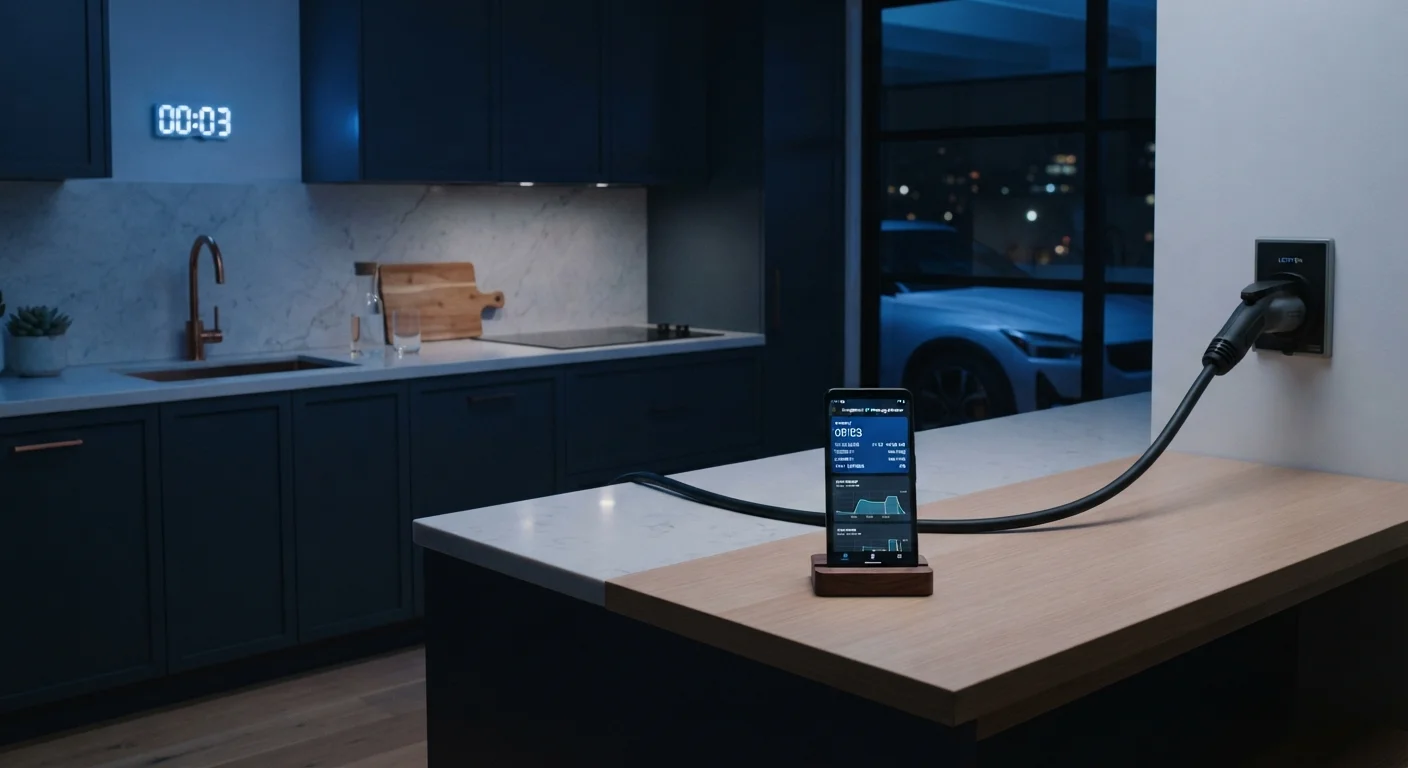
How Time-of-Use Tariffs Work
Electricity grids experience predictable surges in demand — typically weekday mornings and early evenings when homes and businesses are most active. To manage that load, many utilities have introduced time-of-use (TOU) pricing, which prices electricity differently across several daily windows.
A typical TOU structure divides the day into three tiers:
- Peak hours: Highest rate, usually 4–9 p.m. on weekdays
- Off-peak hours: Lower rate, often overnight (9 p.m.–6 a.m.) and weekends
- Mid-peak or partial-peak: Intermediate rate during transition periods
The exact windows and price differentials vary considerably by utility and state — some utilities in California, for example, publish rate schedules where peak rates are more than double their overnight counterparts. Check your utility's published rate schedule for precise figures applicable to your area.
For EV owners who charge predominantly at home, TOU tariffs are particularly relevant. A typical battery electric vehicle might consume 25–35 kWh to fully recharge, so even a modest per-kWh price difference adds up meaningfully across hundreds of charging sessions per year. This is one of the factors covered in depth in the real cost of EV ownership over five years.
~30–50%
Typical off-peak vs. peak rate discount
Rate spreads vary widely by utility; review your provider's published schedule for exact figures applicable in your area.
25–35 kWh
Energy for a typical full EV recharge
Based on common battery capacities across mid-size battery electric vehicles; actual consumption depends on the specific vehicle and driving conditions.
~80%
EV owners who charge primarily at home
According to U.S. Department of Energy survey data on EV charging behavior, the large majority of charging sessions occur at the owner's residence.
Scheduling Your Charging: Practical Steps
Taking advantage of a TOU tariff requires your EV to actually charge during off-peak windows — not whenever you happen to plug in. Fortunately, most EVs and home chargers make this straightforward.
Through the vehicle
Navigate to the charging settings in your car's infotainment system or companion smartphone app. Look for options labeled "Scheduled Charging," "Departure Time," or "Charge Window." You typically set either a start time or a target departure time, and the car calculates when to begin charging to reach your desired state of charge before you leave.
Through the charger
Many Level 2 home chargers (also called EVSE) include built-in scheduling, sometimes managed via their own app. This approach works independently of the car and can be useful if your vehicle's scheduling interface is limited.
Key considerations
- Set a minimum charge override so the car charges immediately if you plug in below a critical battery level.
- Account for seasonal variation — if your utility adjusts seasonal peak windows, update your schedule accordingly.
- Avoid relying solely on manual timing; automation removes the risk of forgetting to plug in early.
For guidance on protecting your battery alongside managing costs, see smart charging habits that protect your battery and lower your bills.
Set a Low-Battery Override
Most EVs allow you to define a minimum state of charge below which the car will begin charging immediately, regardless of your scheduled window. Setting this to around 20% ensures you're never stranded by an unexpectedly low battery while still capturing off-peak rates the vast majority of the time.
Evaluating Whether a TOU Plan Makes Sense for You
Switching to a TOU tariff is not automatically advantageous for every household. The benefit depends on two variables working in your favor: a meaningful rate spread between peak and off-peak periods, and a usage pattern that lets you actually shift consumption into cheaper windows.
Before switching, consider the following:
- Your total household electricity profile
- If your home's heaviest usage — air conditioning, cooking, laundry — already occurs predominantly in the evening or daytime peak window, a TOU plan may raise your overall bill even as it lowers your EV charging cost. Run the numbers on your full usage, not just your EV.
- How much you drive
- Higher annual mileage means more charging sessions and a larger potential saving. Drivers covering 15,000+ miles per year stand to benefit more than those doing 6,000–7,000 miles annually.
- Your utility's specific rate structure
- Some utilities offer a second meter option exclusively for EV charging, allowing that circuit to run on a separate rate schedule. This can provide off-peak savings on EV energy without exposing your whole-home usage to peak pricing risk.
It's also worth being aware of planning assumptions that can distort these calculations. The article on assumptions that can skew your EV cost calculations covers several traps to avoid.
For a broader perspective on how home charging fits into your overall EV strategy, home charging vs. public charging examines the trade-offs in detail. And if you're still forming your overall picture of EV running costs, how EV servicing costs differ from petrol and diesel provides useful context on the broader cost landscape.
TOU Plans Vary Significantly by State and Utility
There is no single national standard for TOU rate structures in the United States. Window definitions, rate differentials, and enrollment eligibility all differ by utility. Some states have mandated TOU options; others leave it to individual utilities. Always request your utility's current rate schedule and compare it against your household's metered data before making a switch.