
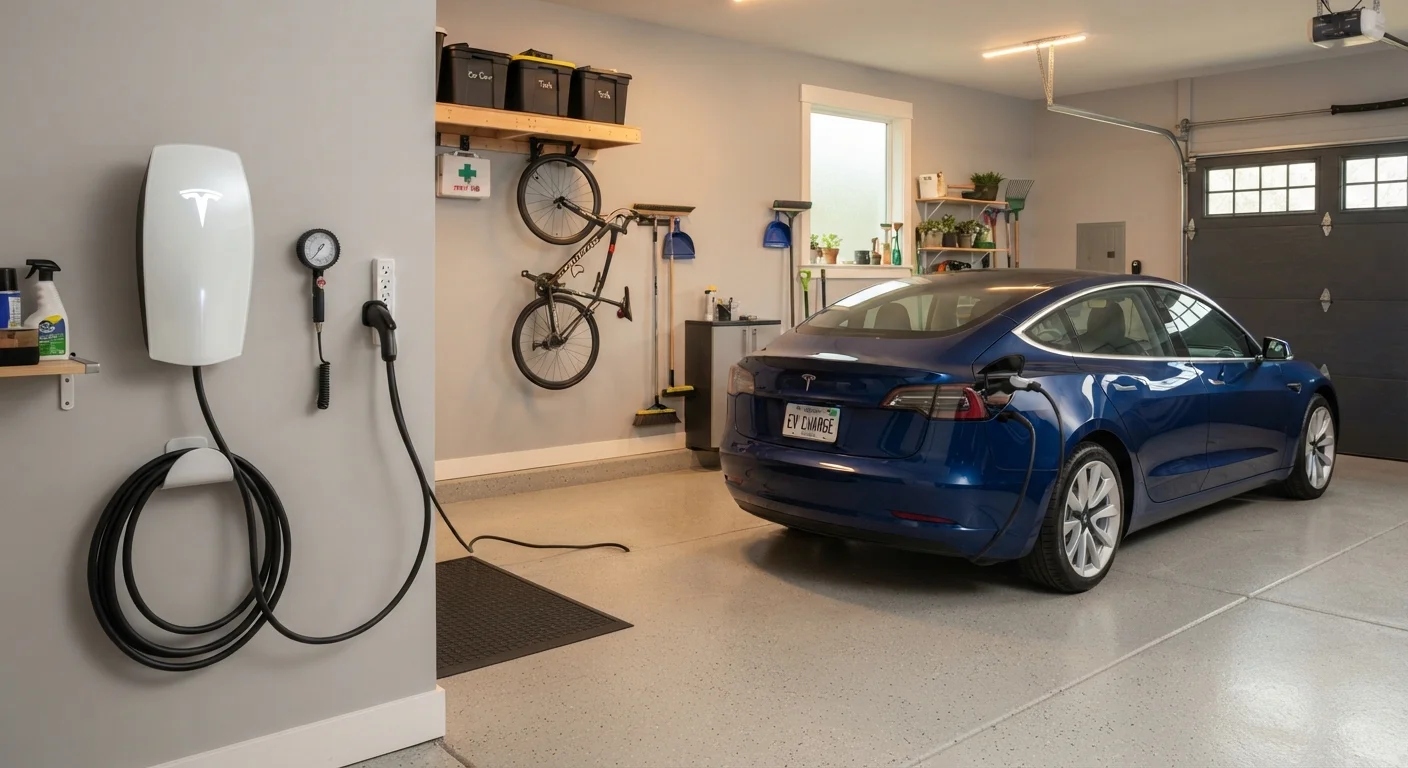
Why You Need to Prepare Before Delivery Day
Most EV buyers focus almost entirely on choosing a vehicle, then discover — sometimes the evening their car arrives — that their home isn't ready to charge it. A Level 2 home charger (the kind that adds meaningful range overnight) requires a dedicated 240V circuit, a compatible outlet or hardwired connection, and in many cases a panel assessment. None of that happens the same day.
This checklist is designed to walk you through every decision point in roughly the right order, from checking your electrical panel through to claiming available incentives. If you're still weighing whether an EV is the right choice, see our hybrid buyer's checklist as a useful starting comparison. For a broader look at EV charging logistics and ownership costs, our Charging & Costs hub covers the full picture.
Renters and Flat Dwellers: Different Rules Apply
If you rent your home or live in a multi-unit building, you generally cannot install a permanent charger without landlord or HOA consent, and local ordinances vary significantly. Review our dedicated guide on charging options for renters and flat dwellers before proceeding with any of the steps in this checklist.
What You'll Need to Get Started
Before calling an electrician or purchasing any equipment, gather the items below. Having this information on hand makes your installer assessment faster and your quotes more accurate.
Licensed Electrician
Assess your electrical panel, run a dedicated circuit, and ensure installation meets local code.
Electrical Panel Diagram / Home Inspection Report
Helps you and your electrician understand existing load and available capacity before the site visit.
EV Manufacturer's Charging Guide
Specifies the recommended circuit amperage and connector type for your particular vehicle.
Utility Company Time-of-Use Rate Schedule
Identifies cheaper overnight rate windows so you can programme your smart charger to reduce electricity costs.
IRS Form 8911 (or current equivalent)
Used to claim the federal Alternative Fuel Vehicle Refueling Property Credit — verify the current form with a tax professional.
Working Through the Checklist
The groups below follow a logical sequence: confirm your electrical capacity first, then choose your charger and placement, then sort out the installer and permits, and finally look at what financial assistance is available. Skipping ahead — for example, buying a charger before an electrician confirms your panel can support it — is a common and costly mistake.
Electrical Assessment
Charger Type and Placement
Installer Qualifications and Permits
Costs, Grants, and Incentives
Never Skip the Electrical Permit
Installing a Level 2 charger without a local electrical permit is against code in most US jurisdictions. Unpermitted electrical work can invalidate your homeowner's insurance claim if a fire or fault occurs, and may require costly remediation before a home sale. Always confirm your installer plans to pull the permit before work begins.
Panel Upgrades Add Time and Cost
If your panel is 100A or older, adding a 40–50A EV circuit could push it beyond safe capacity. A panel upgrade to 200A typically adds $1,500–$4,000 or more to your project, depending on your location and local utility requirements. Factor this into your budget and timeline well before your vehicle's delivery date.
On the incentives side, federal, state, and utility programs can meaningfully reduce your out-of-pocket cost. Our article on government grants and incentives for EV charging infrastructure provides a structured overview of what's publicly available. Tax credit eligibility depends on your individual circumstances, so treat any figures as a starting point for a conversation with a qualified tax professional rather than a guarantee.
If you plan to take longer trips in your EV, home charging is only part of the equation. See our guide on planning charging stops on long road trips to round out your preparation.
This article provides general educational information about home EV charging setup. It is not a substitute for advice from a licensed electrician, and any tax credit information should be verified with a qualified tax professional, as rules and eligibility change. Coverage, costs, and incentive availability vary by location and individual circumstance.