
Why Degradation Is Slower Than the Reputation Suggests
Ask a skeptic why they're hesitant about electric vehicles, and battery degradation often comes near the top of the list. The fear is intuitive: smartphones and laptops lose battery life noticeably within a couple of years, so why wouldn't a car?
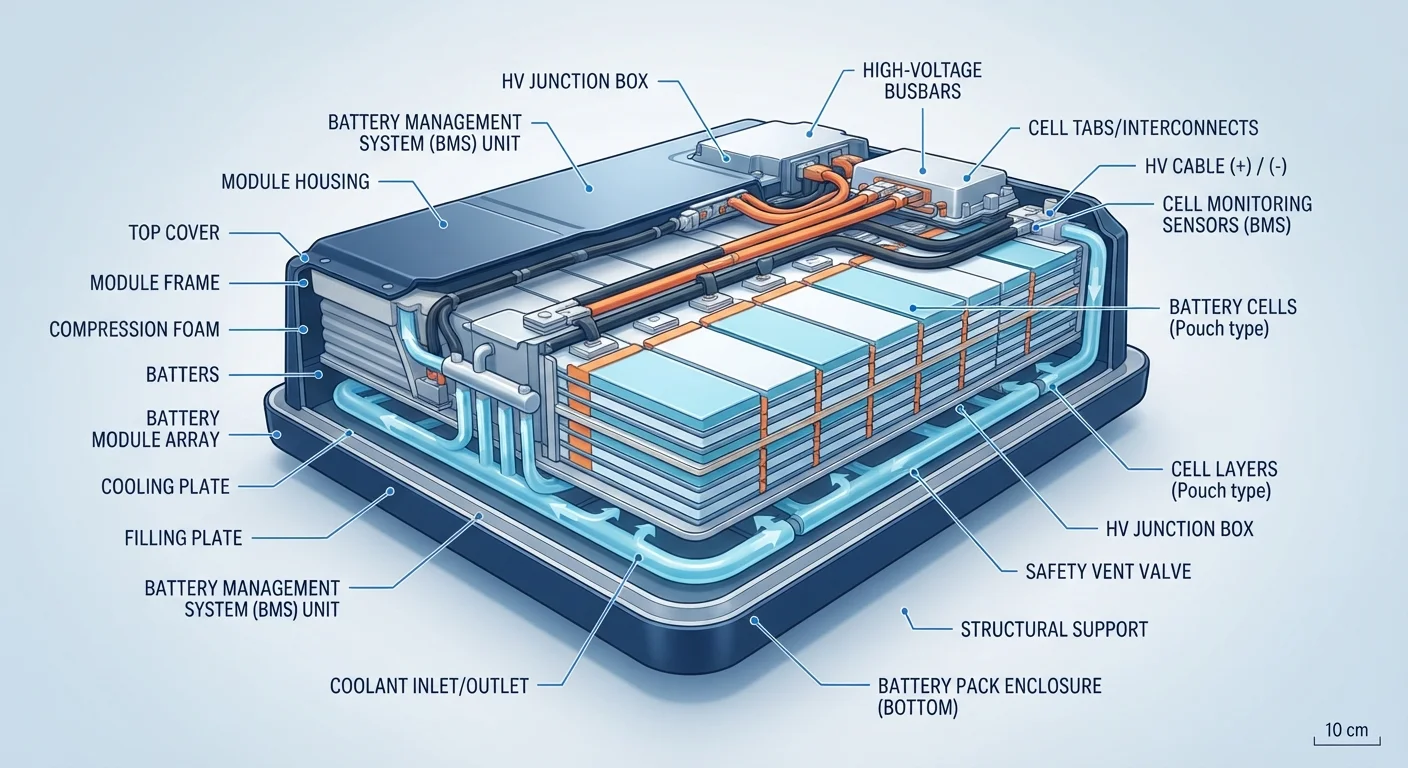
The comparison doesn't hold up. Consumer electronics typically use small battery cells with minimal thermal management, and they're routinely charged fast and drained completely. EV battery packs are a different category entirely — large, actively cooled, and governed by sophisticated Battery Management Systems (BMS) that prevent the charge patterns most damaging to cell chemistry.
Data collected from real-world EV fleets broadly supports this. Studies tracking vehicles over multiple years consistently find capacity loss in the range of 1–3% per year, meaning a battery starting at 300 miles of range might settle around 255–270 miles after a decade of typical use. That's a meaningful but manageable reduction — and one that's often offset by the fact that original EPA range estimates tend to be conservative.
Battery Health Varies by Chemistry and Thermal Design
Not all EV batteries degrade at the same rate. Vehicles using lithium iron phosphate (LFP) chemistry are generally less sensitive to frequent full charges than nickel manganese cobalt (NMC) cells, and active liquid cooling typically outperforms passive air cooling for long-term health. When evaluating a specific model, it's worth researching which battery type and thermal management approach it uses.
For a broader look at how this fits into common misconceptions about electric vehicles, see the evidence behind common EV myths.
What Actually Drives Battery Degradation
Understanding the real culprits helps separate genuine concerns from myths.
Heat — the biggest factor
Sustained high temperatures are consistently identified as the primary accelerant of capacity loss. Parking an EV in extreme heat for prolonged periods — especially with a high state of charge — stresses the cells more than almost any driving pattern. EVs sold in hot-climate states show measurably higher degradation rates than identical models in cooler regions.
Charge habits — important, but often overstated
Lithium-ion cells experience the least stress when held between roughly 20% and 80% charge. Routinely sitting at 100% or dropping to near 0% accelerates chemical aging. Most EV charging apps and onboard systems allow owners to set a charge limit, and using this feature daily is genuinely useful — though the benefit is incremental, not dramatic.
DC fast charging — a partial concern
High-voltage DC fast charging pushes more current through cells and generates heat, both of which accelerate wear. However, EVs with liquid-cooled battery packs handle occasional fast charging well. The concern is most relevant for drivers who rely exclusively on public fast chargers and rarely use home Level 2 charging.
~2.3%
Average annual battery capacity loss
Recurrent Auto analysis of tens of thousands of EVs in the US found median annual degradation of roughly 2.3% under real-world conditions.
8 years / 100K mi
Minimum federal battery warranty requirement
US federal law mandates this minimum warranty for EV and plug-in hybrid battery packs, with most manufacturers also guaranteeing a minimum capacity retention threshold.
~70%
Typical minimum capacity guaranteed under warranty
Most automakers specify that batteries must retain at least 70% of original capacity over the warranty period or be repaired or replaced at no cost.
Warranty Protections and What They Mean for Buyers
Federal regulations require that EV and plug-in hybrid battery packs carry a minimum warranty of 8 years or 100,000 miles. Beyond simply covering failure, most manufacturers also guarantee that the battery will retain a specified minimum capacity — typically around 70% — over that term. If capacity drops below that threshold, the battery must be repaired or replaced under warranty.
This is a meaningful consumer protection that often gets overlooked in degradation discussions. For the majority of buyers who keep a vehicle for eight years or fewer, the warranty period effectively covers the entire ownership window.
Set Your Charge Limit and Forget It
Most EVs allow you to cap daily charging at 80% through the vehicle's app or onboard settings. Set this once and rely on it for everyday driving. You'll likely never notice the reduced ceiling on a normal commute, and you'll be reducing long-term cell stress without any ongoing effort.
If you're evaluating the financial side of EV ownership, it's worth reviewing common assumptions that can skew EV cost calculations, including how battery warranty terms factor into long-term budgeting.
Battery condition does, however, influence resale value over time. A vehicle with documented low degradation — something some automakers now report directly in the car's software — can be a meaningful asset when selling. For more on that dynamic, see how EV depreciation compares to petrol and diesel vehicles.
Practical Steps That Genuinely Help
Most owners don't need to obsess over battery health — modern systems handle much of the management automatically. That said, a few habits make a real difference over the long run:
- Set a daily charge limit around 80%. Reserve full charges for longer trips. Most EVs have this option in their charging settings.
- Avoid leaving the vehicle at very low charge for extended periods. Deep discharges are harder on cells than moderate ones.
- Use a shaded or garage parking spot in hot climates where possible. Reducing thermal exposure during storage is one of the highest-leverage actions available to owners in warm regions.
- Rely on Level 2 home charging as the primary source. It's slower but generates less heat than DC fast charging and suits the daily routine of most drivers.
None of these require major lifestyle changes, and together they can meaningfully extend the useful life of the battery beyond what warranty terms require. For a deeper look at the degradation data itself, battery degradation and long-term range loss covers the topic in greater technical detail.