
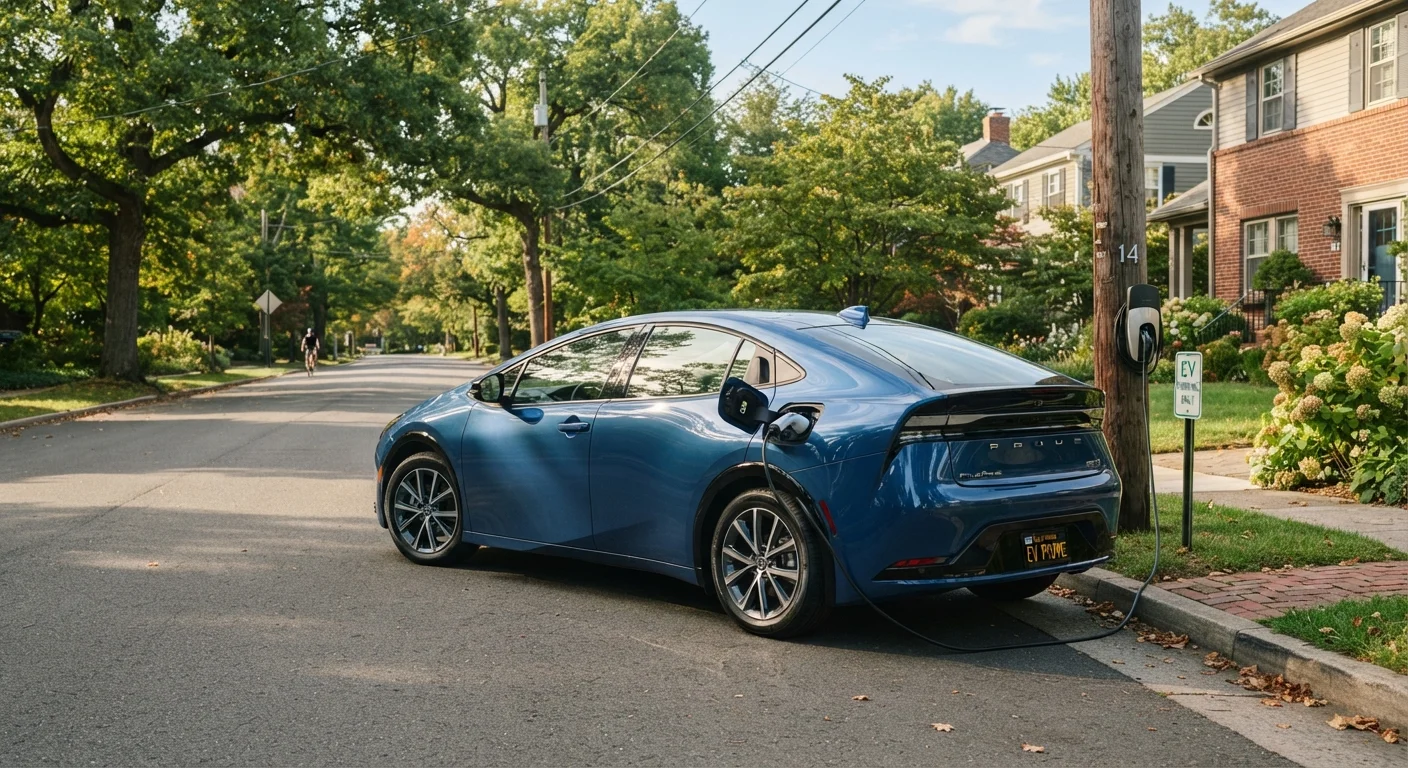
What Makes a Vehicle a Hybrid?
A hybrid vehicle pairs a conventional internal combustion engine (ICE) with at least one electric motor and a rechargeable battery pack. The two power sources work together — or alternate — to move the vehicle, recovering energy that would otherwise be lost as heat during braking (a process called regenerative braking) and using that stored electricity to reduce how hard the gasoline engine has to work.
The result is a powertrain that generally delivers better fuel economy than a comparable gas-only vehicle, particularly in stop-and-go city driving where braking energy recovery is most valuable. Hybrids also tend to produce fewer tailpipe emissions per mile than their non-hybrid counterparts, though the exact figures depend on the specific architecture and how the vehicle is driven.
For a broader comparison of how hybrids stack up against fully battery-electric vehicles, see Hybrid vs Electric: Weighing the Trade-offs for Everyday Drivers.
20–50 mi
Typical PHEV all-electric range
EPA-rated all-electric range for plug-in hybrids varies widely by model and battery size; fueleconomy.gov publishes current ratings.
8 yrs / 100K mi
Federal hybrid battery warranty minimum
U.S. federal law mandates automakers warrant the high-voltage battery for at least 8 years or 100,000 miles on hybrid and electric vehicles.
10–15%
Fuel savings from mild hybrid systems
Mild hybrid architectures typically reduce fuel consumption by 10–15% compared to non-hybrid equivalents under real-world driving conditions.
The Three Main Hybrid Types Explained
Not all hybrids behave alike. The term covers three meaningfully different powertrain designs, each with distinct driving characteristics and ownership implications.
Mild Hybrids (MHEV)
A mild hybrid adds a small electric motor-generator to assist the gasoline engine but cannot propel the vehicle on electricity alone. The electric component primarily handles engine start-stop functions, reduces load at low speeds, and recovers braking energy. Fuel savings are modest — typically 10–15% over a non-hybrid equivalent — but the system adds minimal cost and complexity.
Full Hybrids (HEV)
Full hybrids can drive short distances on electric power only — usually at low speeds or during light acceleration — before the gasoline engine takes over. The battery recharges automatically through regenerative braking and the engine; no plug is ever needed. EPA fuel economy ratings for full hybrids often show significant city-driving advantages over highway figures, reflecting how well the system exploits stop-and-go conditions.
Plug-In Hybrids (PHEV)
PHEVs carry a larger battery that can be recharged from an external power source, delivering a meaningful all-electric driving range — often 20–50 miles depending on the vehicle — before the gasoline engine activates. Drivers who charge regularly and have shorter daily commutes can run predominantly on electricity. For deeper coverage of how these architectures compare, see The Hybrid Landscape: Full Hybrids, Mild Hybrids, and Plug-Ins Explained.
Match the hybrid type to your commute length before anything else. If your daily round trip is under 40 miles and you can charge at home, a PHEV may let you run almost entirely on electricity on weekdays.
The financial and environmental benefit of a PHEV is most pronounced when the electric range covers the majority of daily driving; buyers who cannot charge regularly often see a better value case in a standard full hybrid.
Check EPA city vs. highway mpg figures separately — don't rely on the combined rating alone. Full hybrids often outperform on city cycles and underperform on steady highway driving relative to the combined number.
Regenerative braking, which is most productive in stop-and-go traffic, drives the city-cycle advantage for full hybrids; highway cruising at constant speed has limited opportunity for energy recovery.
Real Ownership Costs: What to Budget For
Purchase price is only the starting point. Hybrid ownership costs include fuel, insurance, maintenance, and potential battery-related expenses over time.
- Fuel: Higher EPA mpg ratings translate to real savings, but the dollar amount depends on your annual mileage and local gas prices. Use EPA's fuel cost calculator at fueleconomy.gov for personalized estimates.
- Maintenance: Full and mild hybrids share most service intervals with conventional vehicles — oil changes, tires, brakes. Because regenerative braking reduces friction brake wear, brake pad replacement intervals are often longer. PHEVs add high-voltage system checks to the service schedule.
- Insurance: Hybrid and PHEV vehicles can carry slightly higher premiums than comparable non-hybrid models, reflecting higher repair costs for electric drivetrain components. Actual premiums vary by insurer, driver profile, and location — consult a licensed insurance agent for quotes specific to your situation.
- Tax incentives: PHEVs meeting specific criteria may qualify for a federal clean vehicle tax credit. Eligibility depends on vehicle price caps, battery capacity, assembly location, and buyer income limits. The IRS and fueleconomy.gov publish current qualifying vehicle lists; consult a tax professional for advice on your individual situation.
For a thorough look at EV and hybrid charging and running costs, explore Charging & Costs.
Tax Credit Eligibility Changes Frequently
Federal clean vehicle tax credit rules — including income caps, vehicle price limits, and assembly location requirements — have changed multiple times in recent years. Do not assume a vehicle qualifies based on older articles or dealer representations. Verify current eligibility on IRS.gov or fueleconomy.gov and consult a licensed tax professional before making purchasing decisions based on anticipated credits.
Charging and Fueling Realities
One of the most persistent misconceptions about hybrids is that they require external charging. Standard full hybrids and mild hybrids do not — they refuel at any gas station exactly like a conventional car. The battery charges itself as you drive.
PHEVs are different. They benefit substantially from regular home charging, ideally using a Level 2 charger (240V), which can fully recharge most PHEV battery packs in 2–4 hours. A standard 120V household outlet (Level 1) will also charge a PHEV battery overnight, though more slowly. If you live in a multi-unit dwelling without dedicated parking or charging access, a PHEV's electric range advantage may be difficult to realize consistently.
When the PHEV battery is depleted, the vehicle operates as a conventional full hybrid — fuel economy drops but you are never stranded. This makes PHEVs genuinely practical for drivers without reliable charging access, though the financial case for the higher purchase price weakens if you rarely charge. Read more about hybrid misconceptions at Common Hybrid Misconceptions That Trip Up Buyers.
Long-Term Value and Battery Durability
Battery longevity is a common concern, but the data from vehicles that have been in service for more than a decade is generally reassuring. Hybrid battery packs — especially in full hybrids — are engineered for high cycle counts and thermal management. Many owners report their original battery packs functioning well past 150,000 miles.
Federal law requires hybrid and EV manufacturers to warranty the high-voltage battery for at least 8 years or 100,000 miles (15 years or 150,000 miles in California and states that have adopted California emissions standards). This warranty floor provides a meaningful safety net for buyers, particularly in the used market.
Resale values for hybrids have historically been competitive, supported by sustained demand and the perception of lower fuel costs. That said, resale value is influenced by many factors — trim level, mileage, condition, and regional demand — and cannot be guaranteed. No content here should be taken as a prediction of future vehicle value.
California Warranty Standard Extends Coverage
Consumers in California and states that have adopted California emissions standards benefit from a higher mandatory battery warranty: 15 years or 150,000 miles. If you are purchasing a used hybrid originally sold in one of these states, the remaining warranty term may differ from the federal baseline. Confirm the applicable standard with the manufacturer's warranty documentation.
What to Check Before You Commit
Whether you are evaluating a new or used hybrid, a systematic pre-purchase review helps you avoid surprises. Key areas to assess:
- Battery health (used vehicles): Request any available dealer diagnostic report showing battery state of health. For PHEVs, verify the all-electric range still meets advertised specs, as battery capacity degrades modestly over time.
- Service history: Confirm that scheduled maintenance — including hybrid system inspections — has been performed. Gaps in service records are a caution flag on any vehicle.
- Charging setup compatibility (PHEVs): Verify your home electrical panel can support a Level 2 charger if you plan to install one. Consult a licensed electrician before installation.
- Driving pattern fit: Honestly map your typical weekly mileage and trip structure. A long highway commuter may see smaller gains from a full hybrid than a city driver; a PHEV buyer who cannot charge regularly will not recoup the premium over a standard hybrid.
- Remaining warranty: Confirm whether the original high-voltage battery warranty is still active and whether it is transferable to a subsequent owner.
Use the Evaluating a Hybrid Before You Commit: A Buyer's Checklist for a structured walkthrough, and if you are brand new to hybrid ownership, start with Hybrid Ownership from Day One: A Practical Starting Point.
This article provides general educational information about hybrid vehicles and is not personalized financial, tax, insurance, or legal advice. Vehicle specifications, incentive eligibility, and regulatory requirements vary and are subject to change. Consult qualified professionals for guidance specific to your circumstances.