
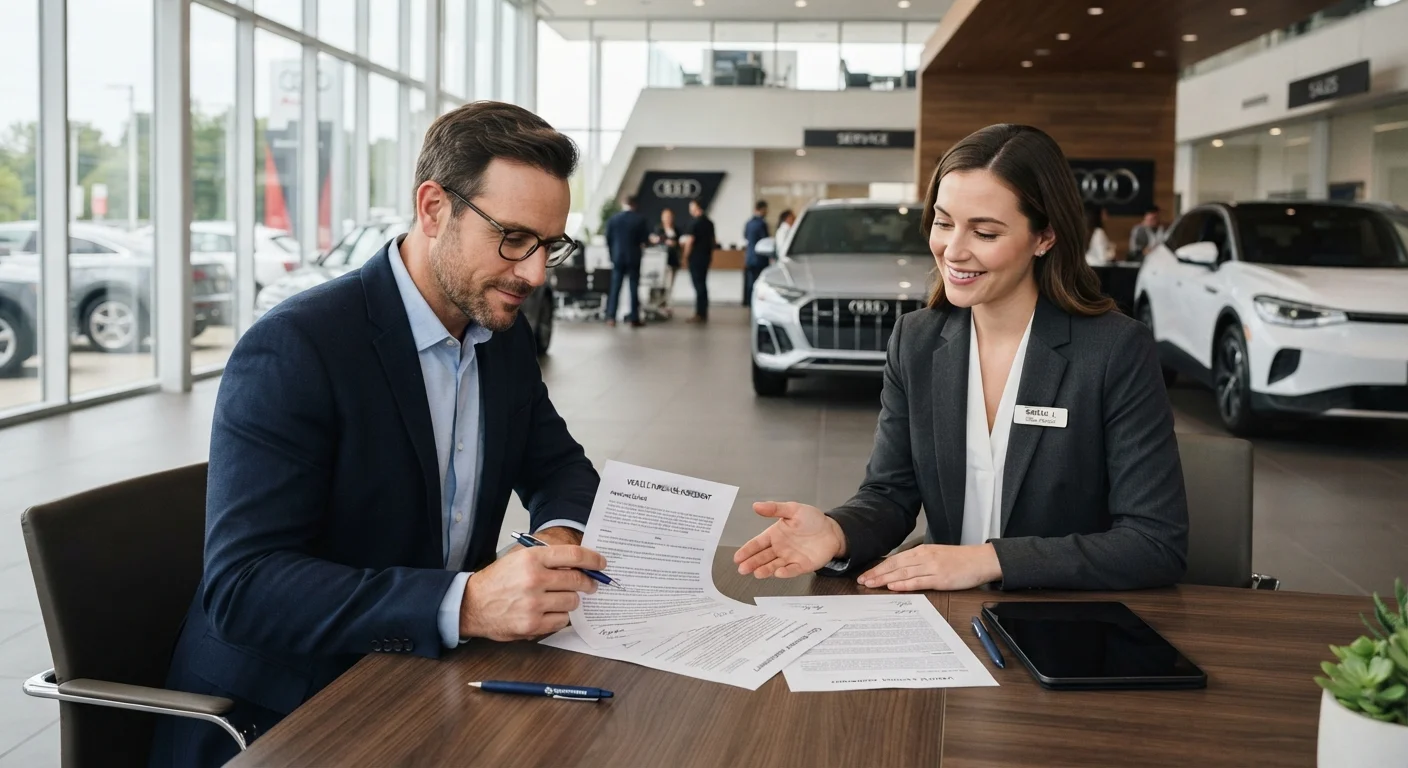
Why Your Opening Offer Sets the Entire Tone
In any price negotiation, the first number carries disproportionate weight. Research in behavioral economics consistently shows that the initial anchor shapes both parties' perception of a fair outcome — a dynamic that applies directly to car buying. If you open with the sticker price as your reference point, the entire conversation flows from there. If you open with invoice-based data and competing quotes, the conversation starts from a fundamentally different place.
This isn't about aggression or gamesmanship. It's about entering the conversation as an informed buyer rather than a passive one. If you haven't yet built the foundational research this approach depends on, review what to research before visiting a showroom before proceeding.
What you will need
How to Make Your Offer
The steps below walk through the mechanics of opening a price conversation — from confirming the vehicle to handling the dealer's counteroffer. Each step builds on preparation you should already have completed. If you're newer to this process, a practical starting point for first-time buyers provides useful context on how dealership negotiations work overall.
Invoice Price Data
Provides the baseline cost the dealer paid for the vehicle, giving your offer a factual anchor point.
Competing Dealer Quotes
Written or printed quotes from other dealers on the same trim create measurable negotiating leverage.
Manufacturer Incentives Summary
Documents any current factory rebates or special rates that legitimately lower the price floor.
Notepad or Phone Notes App
Track every number the dealer presents in real time so you can spot inconsistencies or fee creep.
Pre-approved Loan Offer
A competing financing offer from a bank or credit union strengthens your position if dealer financing enters the conversation.
Confirm the exact vehicle and trim before any pricing talk
Before a single number is mentioned, verify that the specific vehicle you researched — VIN, trim level, and installed options — is the one being discussed. Dealers sometimes substitute similar vehicles when the one you priced online is unavailable. Mismatched specs invalidate your research. Ask to see the window sticker (Monroney label) and confirm it matches your notes.
State your preparation before stating your number
Open by briefly signaling that you've done your homework. A single sentence works well: "I've researched the invoice price and pulled quotes from a couple of other dealers for the same trim." You're not bragging — you're setting a factual tone. This shifts the conversation away from sticker-price theatrics and tells the salesperson that emotional pressure tactics are unlikely to land.
Anchor your offer below your true target
Your opening number should sit below what you're actually willing to pay — but it must be defensible. A reasonable starting point is typically 3–5% below the invoice price on new vehicles, or 5–8% below the current asking price on used vehicles, adjusted for market conditions. Present it as a figure, not a range. Ranges signal that you'll move immediately; a single number signals that you've thought it through.
Justify the number with one or two data points
Briefly explain the rationale without turning it into a lecture. For example: "The invoice on this trim is $X, and I have a written quote from another dealer at $Y. I'm offering $Z as an out-the-door figure." Two data points are enough. More than that sounds defensive; fewer sounds arbitrary. Refer to your competing quotes or manufacturer incentives here if relevant.
Go silent and let the dealer respond
Once you've stated your offer and its rationale, stop talking. The urge to fill silence by softening your position is one of the most common — and costly — negotiating errors buyers make. Let the dealer's counteroffer be the next number in the room. Their response tells you how much flexibility exists and what objections you'll need to address.
Respond to the counteroffer with a measured move
When the dealer counters, move in small increments — not in jumps. If you opened at $500 below your target, consider a second offer that closes only half that gap. Each concession you make should feel deliberate, not reflexive. If the counter includes new fees or add-ons that weren't in your original out-the-door discussion, address those separately before moving your price position.
Always Negotiate the Out-the-Door Price
Dealers may shift focus to monthly payments instead of total vehicle cost. A lower monthly payment can mask a higher overall price through longer loan terms. Insist on negotiating the full out-the-door (OTD) price — including taxes, fees, and any dealer add-ons — before any financing discussion begins. This is the only number that tells you what the car actually costs.
Keeping the Conversation Productive After Your Offer
Once offers and counteroffers are in motion, the structure of the conversation matters as much as the numbers. Keep every discussion focused on the out-the-door price. If the salesperson shifts to monthly payments, gently redirect: "I'd prefer to settle on the vehicle price first and handle financing separately."
Timing Can Amplify Your Offer's Power
Dealers face monthly and quarterly sales targets, which means offers made near the end of a month or quarter often receive more flexibility. This doesn't change your strategy, but it can change the outcome. If your timeline is flexible, the timing of your offer is a legitimate tool to consider alongside price research.
If you feel the negotiation is stalling or pressure is building, slowing the pace is a valid move. There's no obligation to decide in a single visit. Buyers who are willing to leave and return — or follow up by email — often find more flexibility than those who signal urgency. For a broader set of habits that keep you in control throughout the dealership visit, see proven negotiation habits for dealership buyers.
Don't Reveal Your Walk-Away Price
Your maximum is your private ceiling — never share it with the dealer. If asked how much you're willing to spend, redirect to the out-the-door number you're targeting. Revealing your walk-away price eliminates your negotiating room entirely and guarantees you'll be pushed to that limit.
On used vehicles, the same principles apply but with additional complexity around vehicle condition and private-party comparisons. Negotiating a used car price without guesswork covers those nuances in detail.
This article provides general educational information about car-buying negotiation strategies. It is not financial or legal advice. Individual circumstances, market conditions, and dealer practices vary. Consult a qualified financial professional for guidance specific to your situation.