
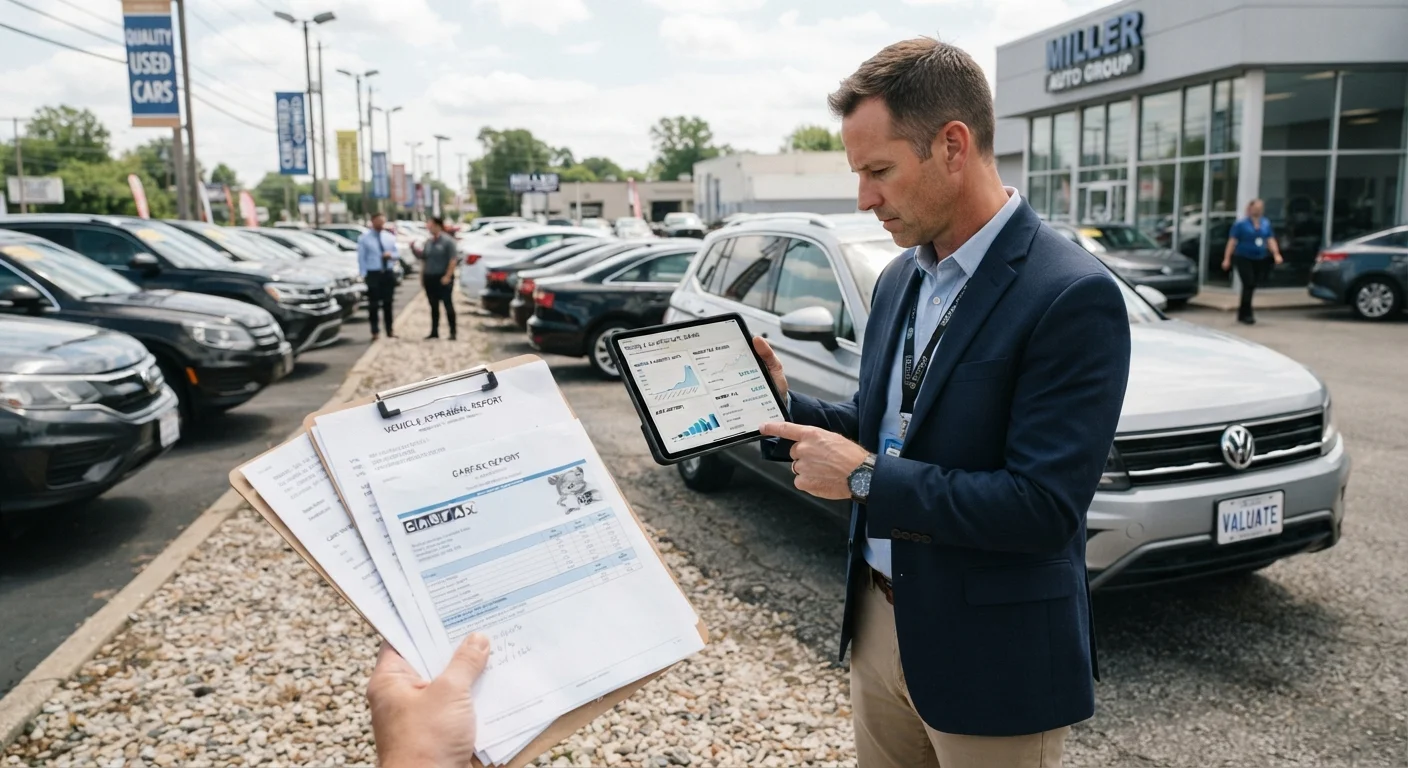
Why Most Used Car Negotiations Go Wrong
The majority of buyers enter used car negotiations at a disadvantage — not because they lack confidence, but because they lack data. Without an independently verified value range, any number a seller quotes becomes the default anchor. From that point, the conversation revolves around how much discount the buyer can squeeze, rather than whether the asking price reflects what the vehicle is actually worth.
Used car pricing is genuinely variable. The same vehicle can carry different asking prices depending on local demand, how long it has sat on the lot, the seller's acquisition cost, and condition factors that aren't visible in a listing photo. Buyers who understand this range — and arrive with documentation to support their position — are in a fundamentally stronger position than those negotiating on instinct alone.
This guide walks through a structured approach to researching, preparing, and executing a grounded used car price negotiation. For context on the broader used car buying process, navigating a used car purchase from start to finish covers research through ownership transfer.
What you will need
What You Need Before You Start
Effective negotiation is preparation-dependent. The tools and information below are not optional extras — they are the foundation of a credible offer. Skipping any of them leaves gaps a motivated seller can exploit.
Vehicle Valuation Tools
Establish a credible fair market value range using industry pricing guides and local listing comparisons.
Vehicle History Report
Reveal accident records, title issues, odometer discrepancies, and service history that affect the vehicle's value.
Independent Pre-Purchase Inspection
A qualified mechanic inspects the vehicle for mechanical problems before you commit, providing negotiating leverage.
Local Comparable Listings
Active listings for similar vehicles in your market show what buyers are actually being asked to pay right now.
Financing Pre-Approval Letter
Proves you are a serious buyer and keeps the price negotiation separate from payment-based maneuvering.
Use Multiple Valuation Sources
No single pricing tool captures the full picture. Cross-reference at least two or three sources — such as industry valuation guides and local listings for comparable vehicles — to identify a realistic price range rather than a single number. The overlap between those sources is where fair market value lives.
Step-by-Step: Negotiating a Used Car Price
Follow these steps in order. Each one builds on the last, and skipping ahead — particularly to the offer stage without completing the research and inspection steps — weakens your position significantly.
Establish the Vehicle's Fair Market Value Range
Pull valuations from multiple independent sources for the exact trim level, mileage, and condition category you are evaluating. Note that valuation tools typically offer separate figures for trade-in, private-party, and dealer retail channels — dealer retail will be the highest. Your target negotiation range should sit between private-party and dealer retail, adjusted for local market conditions.
Cross-reference those figures with active local listings for comparable vehicles. If supply is tight in your area, prices may run higher than national averages — and vice versa.
Pull the Vehicle History Report
Use the VIN to obtain a vehicle history report before visiting the lot. Look specifically for prior accidents and repair severity, the number of previous owners, title status (clean vs. salvage vs. rebuilt), odometer consistency across records, and whether the vehicle was used as a rental or fleet unit. Each of these factors can justify a lower offer or, in some cases, walking away entirely.
Arrange an Independent Pre-Purchase Inspection
Before serious negotiation begins, ask the seller for permission to have the vehicle inspected by an independent mechanic of your choosing. A reputable seller should agree. The inspection typically costs between $100 and $200 and can surface issues worth far more to address. Any confirmed problems become direct, specific negotiating points — not vague complaints, but documented repair estimates.
Set Your Walk-Away Price Before You Negotiate
Determine the maximum you will pay before any conversation begins — not a ceiling you plan to share, but a firm internal limit. Factor in taxes, registration fees, and any immediate maintenance needs revealed by the inspection. Negotiations can create momentum that erodes discipline; knowing your walk-away number in advance is the most reliable protection against overpaying.
Make a Specific, Data-Backed Opening Offer
Open below your target price — but not so low that the offer loses credibility. A specific number (e.g., $17,450 rather than $17,000) signals you have done the math, not just guessed. Reference your valuation data and any inspection findings as the basis. Keep the conversation focused on the out-the-door price, not monthly payments. For a more detailed framework on structuring the opening offer, see how to start the price conversation.
Respond to Counteroffers Methodically
When a counter comes back, pause and evaluate it against your walk-away number — not against the original asking price. Each counteroffer should move you incrementally toward your target, not theirs. If the gap is meaningful, make a specific counter of your own with a brief, factual explanation tied to your research or inspection results. Avoid emotional appeals or rushing the process. If the dealer cannot reach a price within your range, be willing to leave — other vehicles exist.
For a broader look at the full dealership process, including financing and add-ons, the complete dealership negotiation guide covers each stage in depth.
Know Your Financing Before You Negotiate
Separating the vehicle price negotiation from financing terms is critical. Dealers can obscure a weak price with a favorable monthly payment offer. Secure a pre-approval from a bank or credit union before the conversation starts so you negotiate the out-the-door price independently. This article covers general car-buying information and is not personalized financial advice — consult a financial professional for guidance suited to your situation.
Common Pitfalls to Avoid
Even well-prepared buyers can lose ground in the final stages. Watch for these patterns:
- Focusing on monthly payments instead of total price. A dealer can stretch a loan term to make an overpriced vehicle look affordable. Always negotiate the out-the-door price first.
- Revealing your budget ceiling. Once a seller knows your maximum, the negotiation tends to end near that number.
- Becoming emotionally attached before the deal closes. Treat every vehicle as replaceable until the paperwork is signed — because it is.
- Accepting add-ons without scrutiny. Extended warranties, paint protection packages, and similar items are often introduced after the price is agreed. Each one should be evaluated on its own merits, not accepted as a package condition.
Listing Price Is Not Market Value
A dealer's asking price reflects their desired margin, not an independent assessment of what the vehicle is worth. Never anchor your expectations to the sticker — anchor them to your research. Accepting the listing price as a baseline is one of the most common and costly mistakes used car buyers make.
For a complete roadmap covering all stages of dealership negotiation — from initial research through the finance office — see car negotiation from start to finish.
This article provides general educational information about used car purchasing and negotiation. It is not personalized financial, legal, or investment advice. Consult a qualified financial professional before making significant financial decisions.