
Why Dealers Prefer You to Bundle
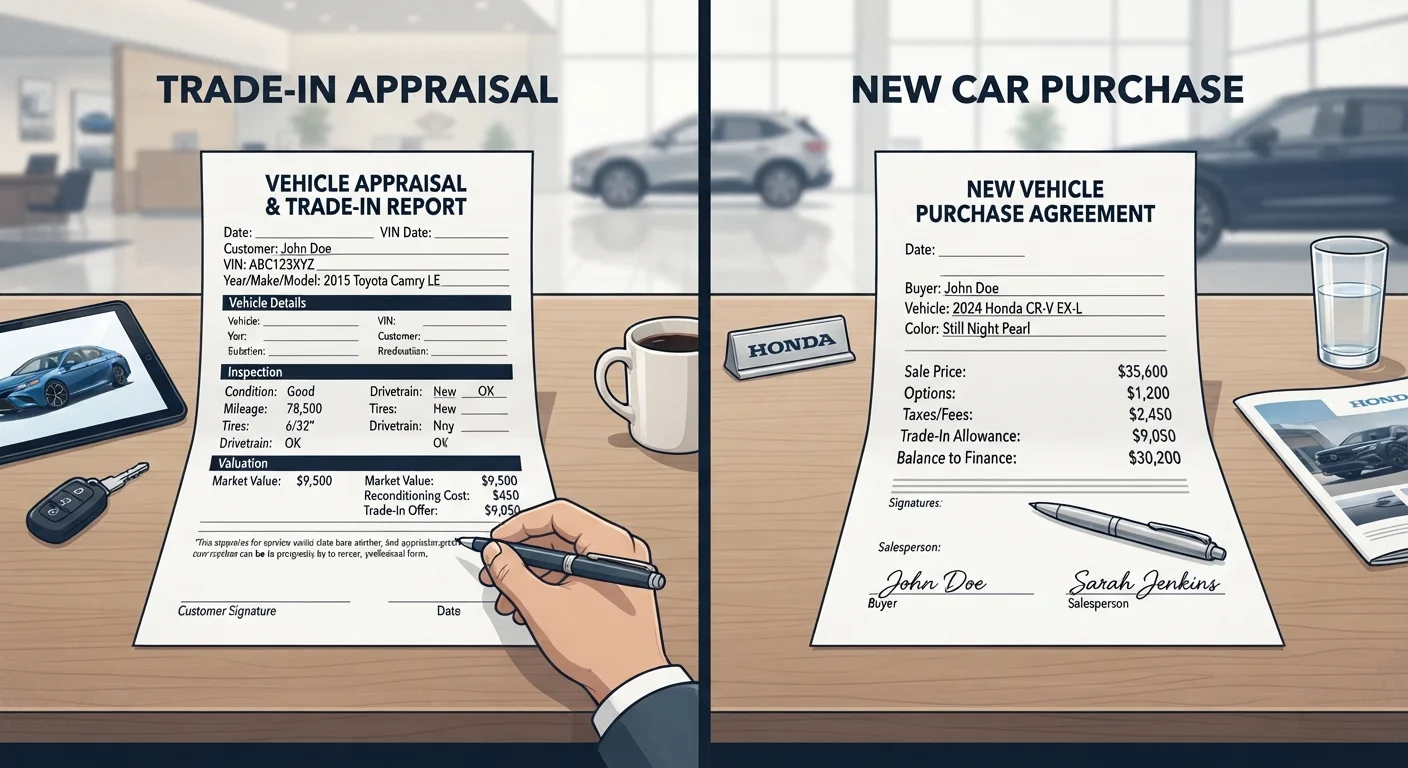
When a dealer handles your trade-in and new car purchase as a single transaction, they gain a critical advantage: multiple variables to adjust simultaneously. If they concede on the trade-in value, they can quietly recover that margin by nudging the purchase price upward, extending the loan term, or reducing a discount they had room to offer. The net result can look like a fair deal on paper while the dealer has actually improved their position.
This practice — sometimes called "payment packing" — is most effective when buyers focus on the monthly payment rather than the individual line items. A $50 monthly difference sounds small, but spread over 60 months it represents $3,000. Dealers know this math; many buyers don't.
Separating the negotiations removes that flexibility. Each deal stands on its own terms, making it far easier for you to verify whether either number is competitive. See our guide on trade-in timing for more on why the sequence of disclosure matters as much as the separation itself.
How to Sequence the Two Deals
The sequencing rule is straightforward: negotiate the purchase price of the new vehicle to a firm number before you mention having a trade-in. Most experienced buyers accomplish this by declining to discuss a trade-in early in the process — a simple "I haven't decided yet" is sufficient — until the purchase price is committed to in writing.
Once you have a documented out-the-door price on the new car, introduce the trade-in as a separate line item. At that point, any adjustment the dealer makes to the trade-in offer is visible in isolation, and you can compare it directly against quotes you've already gathered elsewhere. Used-car market timing also affects what that standalone offer will look like, so knowing current wholesale conditions before you walk in strengthens your position.
Building Your Trade-In Floor Before You Arrive
A competing offer is your strongest tool. Auction-based buying platforms, franchise used-car retailers, and even some credit unions provide written trade-in appraisals with short validity windows — typically three to seven days. Obtaining two or three of these before your dealership visit gives you a documented floor: the minimum you should accept for your vehicle regardless of what the selling dealer offers.
When you present these offers at the dealership, you're no longer negotiating against an unknown; you're asking the dealer to match or beat a number you already have. This also eliminates the "I need to check with my manager" delays that often compress a buyer's leverage late in the day.
For a fuller picture of the trade-in versus private sale trade-off, see Trade-In Value vs. Private Sale. If you intend to use the trade-in to reduce your loan principal, using a trade-in within a financing deal explains how disclosure timing interacts with lender calculations.
Recognizing Blended-Number Tactics at the Table
Even buyers who enter with clear intentions can get pulled into bundled framing once negotiations start. Common signals include: the salesperson switching the conversation from purchase price to monthly payment, the finance office presenting a worksheet that shows trade-in value and purchase price on the same line, or a manager "sweetening" the trade offer contingent on accepting a specific finance rate.
Each of these moves is an attempt to reintroduce variables. The counter is consistent: redirect every conversation back to individual line items. "What is the purchase price?" and "What is the trade-in offer?" are two separate questions, asked and answered separately.
If you feel pressure to decide on both at once, it's reasonable to pause and say you need to evaluate each deal independently before committing. A dealer unwilling to present clean, separated numbers on request is giving you useful information about how the rest of the transaction will go. For broader context on how dealer incentive structures affect these dynamics, see how dealers handle stacked incentives.