
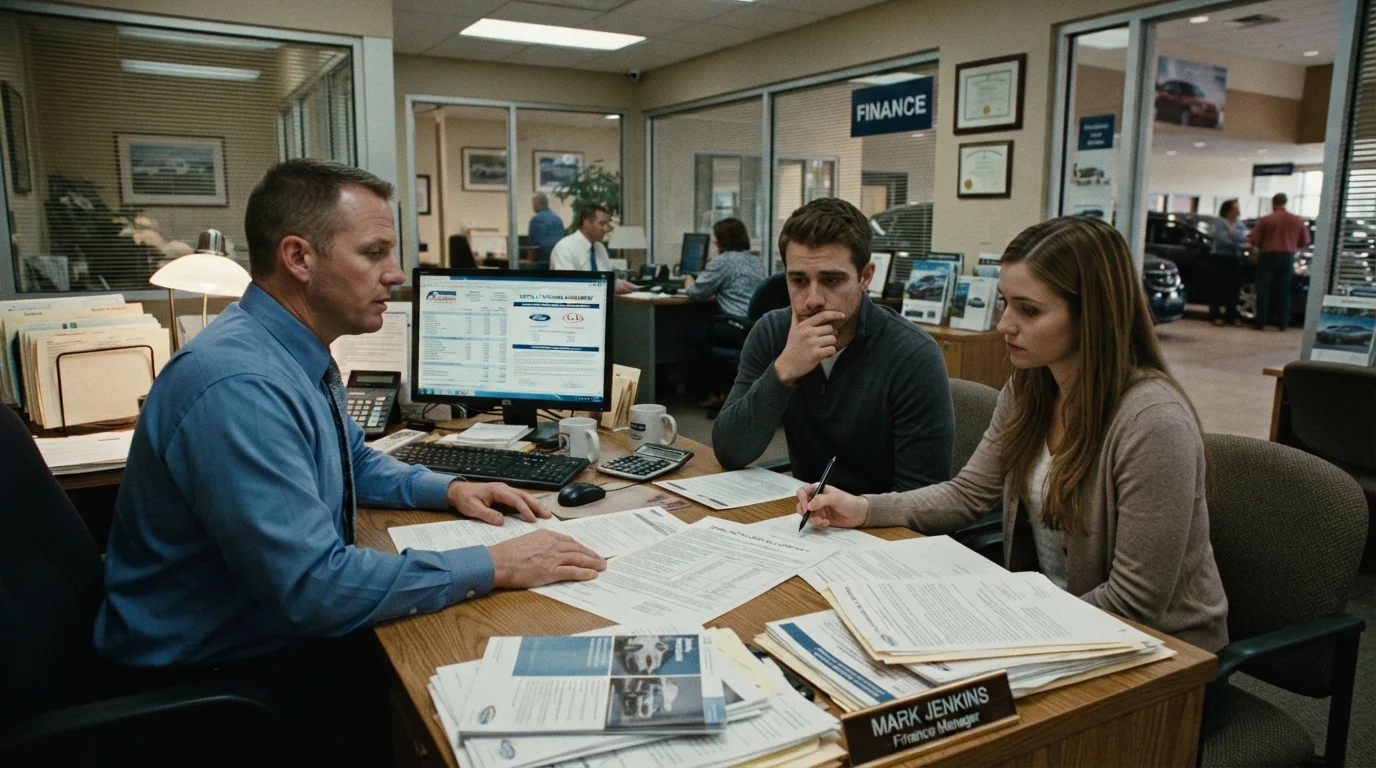
How Savings Disappear After the Handshake
Most buyers treat the moment a salesperson agrees to a price as the finish line. In reality, it is closer to the halfway point. Between that handshake and the signed contract, several separate conversations — each with its own profit potential for the dealership — can quietly reverse everything negotiated up to that point.
This is not about bad faith. Dealerships operate structured sales processes designed to present additional products and services at the moment buyers are most relieved. Understanding where those moments occur, and why they work so effectively, is what keeps a good deal intact through to the final signature.
Cognitive biases and sales structure play a significant role in why buyers consistently spend more than they intend. Knowing the specific traps helps you stay grounded when the pressure mounts.
Shifting the conversation to monthly payments instead of total vehicle price.
Why it happens: Monthly payment framing feels more manageable and relatable than a large lump-sum figure, and dealers know this. Stretching the loan term drops the monthly figure while substantially increasing the total cost paid.
Accepting dealer-arranged financing without comparing it to outside offers.
Why it happens: By the time buyers reach the finance office they are tired and ready to be done. The dealer presents a rate and buyers assume it is competitive, especially if it sounds reasonable.
Agreeing to dealer add-ons bundled into the contract without evaluating each separately.
Why it happens: Add-ons are often presented as a group — paint protection, gap insurance, an extended warranty — with a single blended price. The bundling obscures individual costs and makes each item feel inexpensive by comparison.
Negotiating the trade-in value and new vehicle price simultaneously.
Why it happens: Dealers often invite buyers to discuss both at once, presenting a blended monthly figure that hides how value is being allocated between the two transactions.
Failing to verify whether advertised incentives are actually applied to the contract.
Why it happens: Buyers assume that if a manufacturer incentive or rebate was mentioned during the sale, it will automatically appear in the paperwork. That assumption is not always correct.
Protecting the Deal Through Closing
Preparation is the most effective defence. Before visiting a dealership, decide in advance which add-ons, if any, you would genuinely consider, and set a firm ceiling on what you are willing to spend beyond the agreed vehicle price. That pre-commitment is far harder to override in the moment than a vague intention to "stay firm."
Monthly Payment Focus Costs More Long-Term
When a conversation shifts to "what can you afford per month," the total cost of the vehicle — including interest, add-ons, and fees — becomes much harder to track. A lower monthly payment achieved by extending the loan term or rolling in extras can cost thousands more over the life of the contract. Always anchor negotiations to the total out-the-door price, then work backwards to the monthly figure.
In the finance office, ask for a complete itemised breakdown of every charge before discussing anything. Fees like documentation charges, dealer preparation costs, and market adjustment markups vary widely and are often negotiable or removable entirely — but only if you identify them. For a detailed look at which extras carry genuine value versus which are mostly margin, see the guide on F&I products and dealer extras.
If you are trading in a vehicle, finalise the trade-in value as a separate, documented number before any discussion of the new vehicle price or financing terms. Blending these figures is a classic method for obscuring where value is actually shifting. More on patterns that inflate new car costs can sharpen your awareness before you sit down.
Review Every Contract Line Before Signing
Verbal commitments made during negotiation are not legally binding once you sign a contract that says something different. Before putting pen to paper, read every line item — including fees, add-ons, interest rate, and loan term. If anything does not match what was discussed, stop and ask for a corrected document. This step is the single most effective way to ensure the deal you agreed to is the deal you actually receive. For broader context on how dealer incentives can obscure true costs, see what incentives don't reveal.
Finally, read every line of the contract before signing — not after. Verbal agreements are not binding once the paperwork reflects something different. If a charge appears that was not discussed, ask for it to be removed or explained in writing. Walking away from a nearly-done deal is uncomfortable; signing a contract with buried costs is more expensive.