
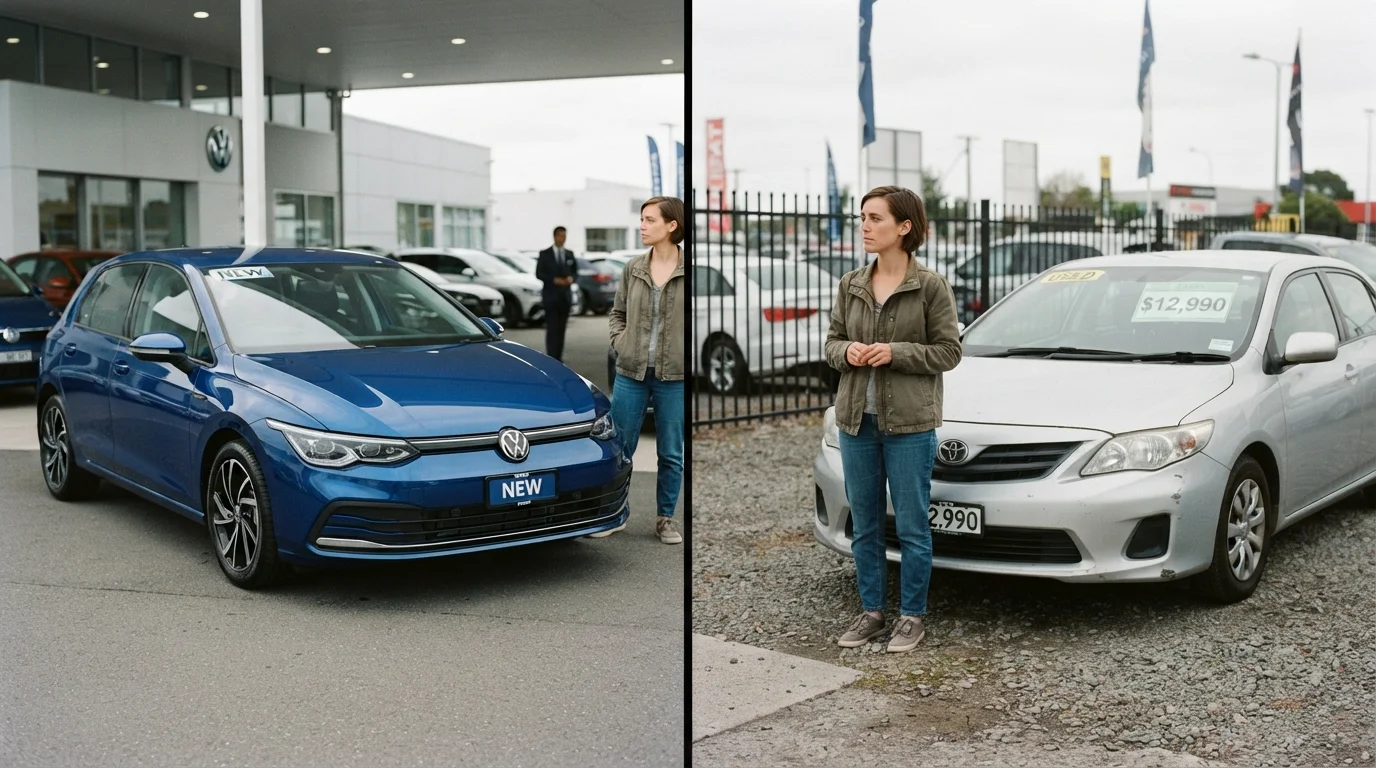
Why the New vs. Used Decision Goes Wrong
Most buyers approaching the new vs. used decision believe they're thinking it through carefully. They compare prices, run a few mental calculations, and land on a choice that feels rational. The problem is that the reasoning errors in this decision tend to be invisible — they're not about missing information so much as about which information gets centered and which gets quietly ignored.
The core trade-offs between new and used involve depreciation, financing, warranty, and reliability — and most buyers have a surface understanding of each. Where things break down is in applying those concepts to their specific financial situation and ownership timeline. General rules become expensive mistakes when they're applied without context.
The mistakes below aren't rare edge cases. They show up consistently, across different price points and buyer profiles, and they're worth understanding before you reach the lot.
Comparing sticker prices instead of total cost of ownership.
Why it happens: The purchase price is visible and concrete; insurance, loan interest, fuel, and maintenance costs are harder to calculate upfront and easy to underestimate.
Assuming the used vehicle is the cheaper option because the price tag is lower.
Why it happens: Buyers anchor on the listed price and don't account for the higher interest rates that typically apply to used auto loans, which can add thousands to the effective cost.
Overvaluing newness as a proxy for reliability.
Why it happens: "New" intuitively feels safer, and first-year warranty coverage reinforces that perception. But new models can carry unresolved defects, while a well-maintained used vehicle may be past those early issues.
Ignoring how long you actually plan to own the vehicle when evaluating depreciation.
Why it happens: Depreciation is often discussed as a reason to buy used, but its relevance depends entirely on ownership horizon. Buyers hear the general rule without applying it to their specific situation.
Skipping an independent mechanical inspection on a used vehicle.
Why it happens: Buyers who feel they've found a good deal are reluctant to slow the process or add cost, and seller-provided inspection reports create a false sense of security.
Making the decision based on the monthly payment target rather than the vehicle's fit for actual needs.
Why it happens: Lenders and dealerships naturally frame decisions around payment, and buyers with a fixed budget think in those terms. It redirects attention from whether the vehicle is the right one.
How to Actually Compare the Two Options
A genuinely useful comparison isn't a gut feeling or a sticker-price glance — it's a structured side-by-side of total annual cost. That means loan interest at the rate you'll actually qualify for, insurance premiums quoted on the specific vehicle, fuel cost at your real annual mileage, and a realistic maintenance estimate that accounts for the vehicle's age and condition.
Don't Skip the Full Ownership Cost Estimate
Insurance premiums, registration fees, fuel costs, and expected maintenance differ substantially between new and used vehicles — and between models of the same age. A used vehicle with a lower sticker price can carry higher insurance costs or more frequent repair needs that erase the savings. Run the full annual ownership estimate before committing.
Used vehicles carry the additional variable of unknown history. Even with a clean vehicle history report, deferred maintenance and wear items may not surface until you own it. That's why an independent pre-purchase inspection isn't optional due diligence — it's the only way to price the used option honestly. Overpaying for used vehicles is often less about negotiating badly and more about skipping this step.
Monthly Payment Is Not the Same as Cost
Stretching a loan term to hit a comfortable monthly figure can cost thousands more over the life of the loan, regardless of whether the vehicle is new or used. Always calculate the total amount paid — principal plus all interest — before signing. A lower payment that runs 72 or 84 months often costs more than a higher payment over 48 months.
New vehicles, meanwhile, have their own cost traps. Financing add-ons, documentation fees, and trim upgrades that looked minor at signing add up. New car buyers overpay in predictable patterns that are worth recognizing before you're in the finance office. And if the model is in its first model year, myths around new car reliability may be shaping your expectations in ways the data doesn't support.
The goal isn't to reach a predetermined answer. Buying new makes financial sense under specific conditions — lower interest rates, longer planned ownership, certain reliability needs. Buying used makes sense under others. The only way to know which applies to your situation is to run the real numbers, not the simplified version.
This article provides general educational information about car-buying decisions. It is not personalized financial advice. For guidance specific to your financial situation, consult a qualified financial adviser.