
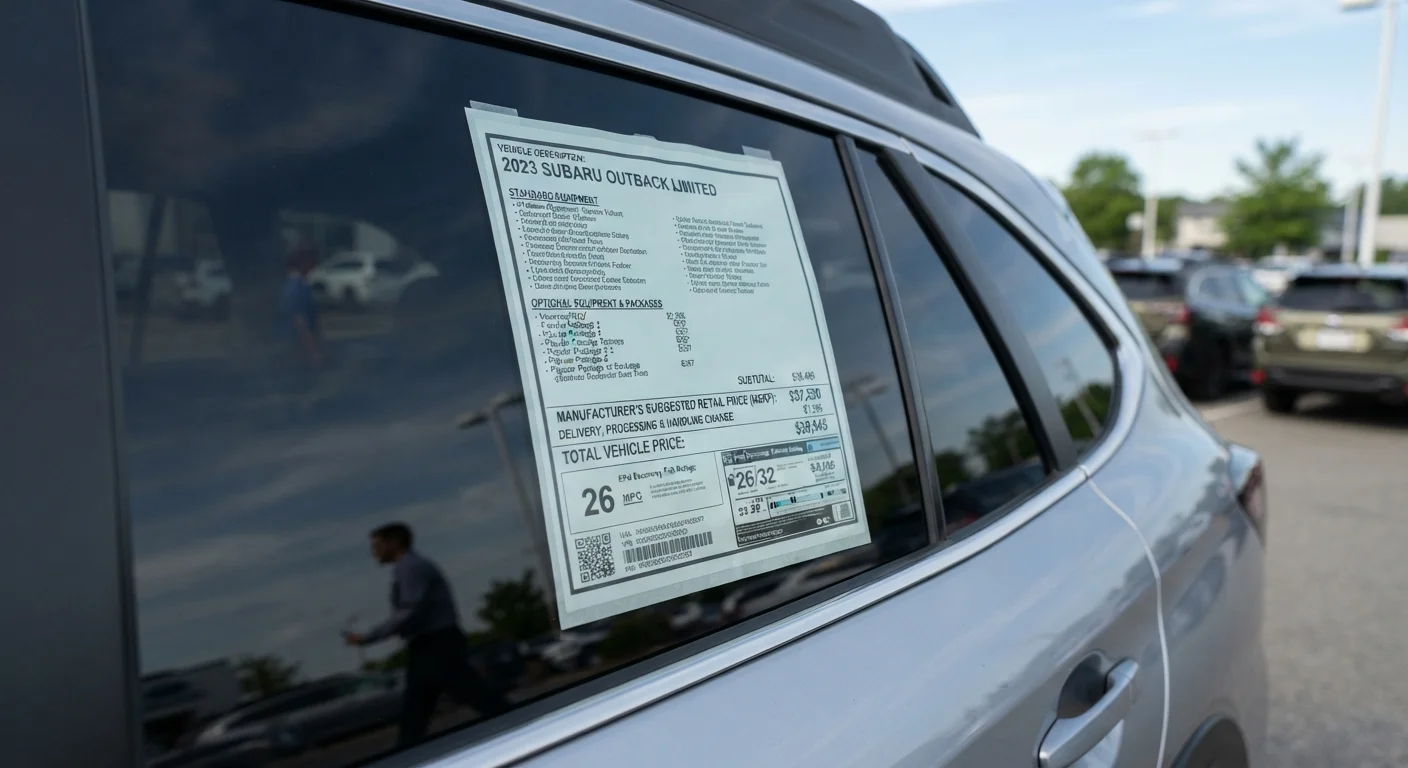
The Three Numbers You'll Encounter — and Why They All Matter
Walk into any dealership and you'll quickly run into a cluster of pricing terms: MSRP, invoice price, dealer cost. They sound technical, but each one tells a distinct story about how a vehicle is priced — and how much room might exist for negotiation. Confusing them is one of the most common mistakes buyers make.
| MSRP | Manufacturer's Suggested Retail Price — the sticker price set by the automaker |
| Invoice Price | The wholesale price shown on the manufacturer's invoice to the dealer |
| Dealer Cost (Dealer Net) | Invoice price minus holdbacks, incentives, and credits — the dealer's true cost |
| Typical MSRP-to-Invoice Gap | Roughly 2%–10% depending on vehicle segment and brand (General industry range; varies by model and market conditions) |
| Holdback | A quarterly credit from manufacturer to dealer, usually 1%–3% of MSRP or invoice |
| Transaction Price | The actual sale price agreed upon — may be above or below MSRP |
This reference breaks down what each figure actually represents, where it comes from, and what it tells you as a buyer. For a broader look at how all these figures connect, see A Complete Map of New Car Pricing.
MSRP: The Manufacturer's Suggested Retail Price
MSRP — Manufacturer's Suggested Retail Price — is the price the vehicle's manufacturer recommends a dealer charge. It's printed on the federally required Monroney label (the window sticker) and covers the base vehicle plus any factory-installed options and a destination charge.
The key word is suggested. Dealers are not legally required to sell at MSRP. In high-demand markets, vehicles can sell above MSRP (often called a market adjustment or ADM). In slower markets, they frequently sell below it. MSRP is a starting reference point, not a ceiling or a floor.
Invoice price vs. MSRP explained in full covers how these two figures diverge — and why the gap between them matters when you're sizing up a deal.
MSRP
Manufacturer's Suggested Retail Price — the price the automaker recommends dealers charge, printed on the required window sticker. It includes the base vehicle, factory options, and destination fee, but dealers are free to sell above or below it.
Invoice Price
The amount listed on the manufacturer's invoice to the dealer, representing the nominal wholesale price. It is always lower than MSRP but higher than the dealer's actual net cost once credits are factored in.
Dealer Holdback
A periodic payment (typically quarterly) that manufacturers send back to dealers, calculated as a percentage of MSRP or invoice. It allows dealers to advertise or sell near invoice while preserving a profit margin.
Dealer Net (Dealer Cost)
The true all-in cost to the dealer after subtracting holdbacks, dealer cash, and other manufacturer incentives from the invoice price. Buyers cannot calculate this figure precisely from public data.
Market Adjustment (ADM)
An amount added above MSRP by dealers on high-demand vehicles. ADM stands for Additional Dealer Markup. It is legal but negotiable depending on supply and market conditions.
Destination Charge
A fixed fee, set by the manufacturer, that covers the cost of shipping the vehicle from the factory to the dealership. It is included in MSRP and is non-negotiable.
Invoice Price: What the Dealer Paid the Manufacturer — on Paper
Invoice price is the amount shown on the manufacturer's invoice to the dealer — essentially the wholesale price. It's always lower than MSRP, and the difference represents the dealer's nominal gross margin.
Historically, savvy buyers used invoice price as a negotiating target, aiming to pay at or near invoice rather than MSRP. That logic still has merit, but with one important caveat: invoice price is not the dealer's true out-of-pocket cost.
Dealers routinely receive money back from manufacturers through mechanisms such as holdback (a percentage of MSRP or invoice rebated quarterly), dealer cash incentives, and volume-based bonuses. These credits mean a dealer can sell at invoice — or even slightly below it — and still turn a profit. For a detailed look at how this works, see Why the Invoice Price Is Not the Dealer's True Cost.
2%–10%
Typical MSRP-to-invoice spread by segment
General industry estimates suggest the gap between MSRP and invoice varies significantly by vehicle category, with trucks and SUVs often at the higher end.
1%–3%
Common dealer holdback range as % of MSRP
Industry sources indicate most domestic manufacturers provide holdbacks in this range, paid quarterly to dealers regardless of negotiated sale price.
Dealer Cost: The Elusive Real Number
Dealer cost (sometimes called dealer net) is what the dealership actually spends, net of all manufacturer credits, to put a vehicle on its lot. It's nearly impossible for a buyer to calculate precisely because holdbacks, dealer cash, and floor plan assistance (help covering the cost of financing inventory) are confidential arrangements between the manufacturer and dealer.
What buyers can do is use invoice price as a reasonable proxy while understanding it overstates the dealer's true cost. The spread varies by brand, model, and current incentive programs. Dealer Holdback and Invoice Price: The Gap Behind the Sticker explains the mechanics of holdback in detail and how it affects your negotiating position.
Understanding these layers also explains why transaction prices — what cars actually sell for — frequently differ from both MSRP and invoice. See Transaction Price vs. Sticker Price for industry context on real-world sale prices.
Invoice Price Is a Useful — But Imperfect — Benchmark
Knowing the invoice price gives buyers a meaningful data point and a reasonable starting anchor for negotiation. However, treating invoice as the dealer's floor can lead buyers to underestimate the actual room in a deal. Manufacturers' incentive programs change frequently, and the true dealer cost can be several hundred to several thousand dollars below invoice depending on the vehicle and the time of year. Use invoice as one reference among several, not as the definitive cost floor.
For a full reference of pricing terminology, the Car Pricing Glossary: 20 Terms Decoded covers every term you're likely to encounter from initial research through contract signing.
This article provides general educational information about vehicle pricing concepts. It is not personalized financial or purchasing advice. Actual prices, margins, and incentive programs vary by manufacturer, model, region, and time. Consult multiple sources and, where appropriate, a licensed financial professional before making significant purchasing decisions.