
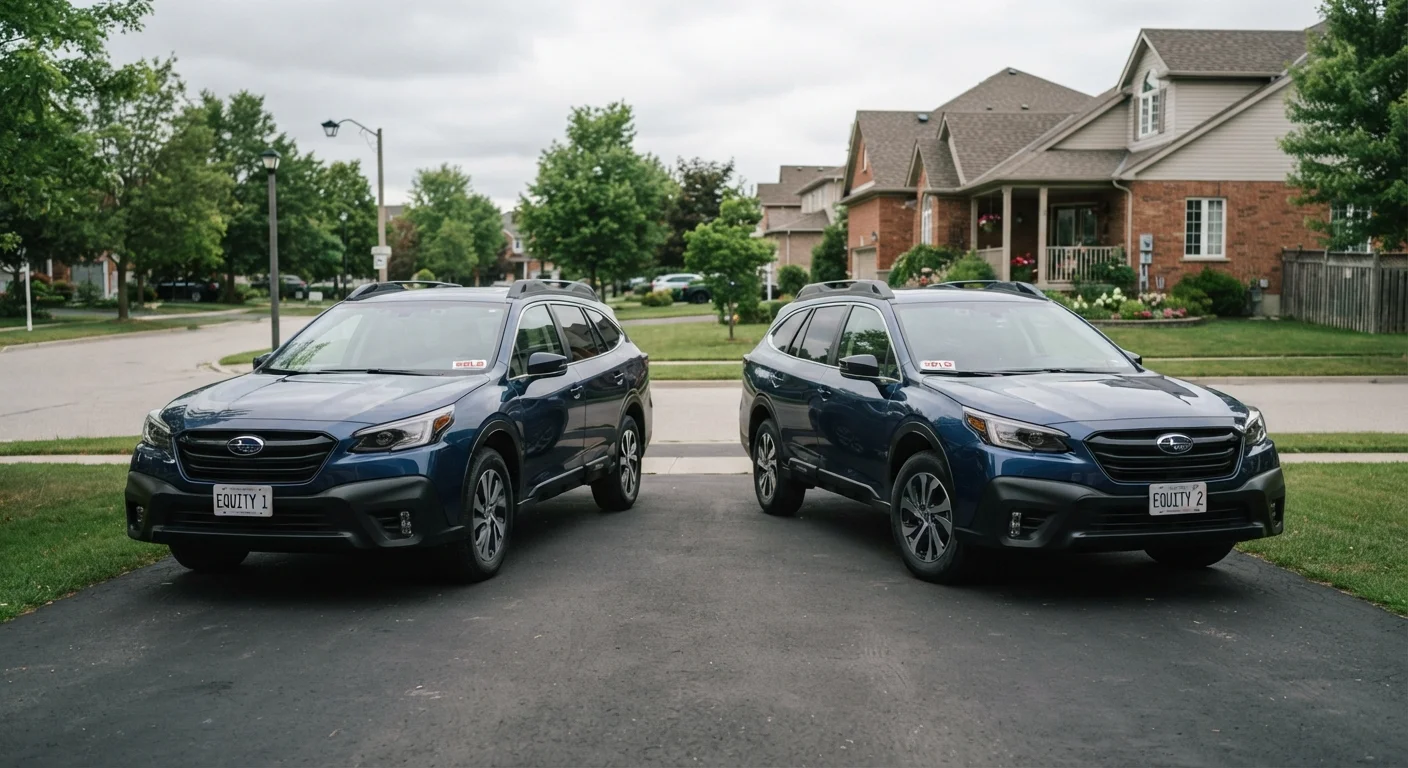
The Rate Gap Is Real — and It's Not Random
If you've ever compared insurance bills with a neighbor and felt like the math didn't add up, you're not imagining it. Two drivers on the same street, insuring the same make and model with the same coverage limits, can easily see a $500 or more difference in annual premiums. That gap isn't arbitrary — it's the product of a highly individualized pricing model that weighs dozens of variables at once.
Understanding which factors actually matter, and which ones are myths, is the first step to anticipating your true cost of ownership. For a deeper look at how the formula works, see how car insurance premiums are actually calculated.
Myth
Red cars cost more to insure because insurers charge more for flashy colors.
Fact
Vehicle color is not a rating factor used by U.S. auto insurers. Your premium is unaffected by whether your car is red, white, or black.
This is one of the most durable auto insurance myths. Insurers don't ask about color on applications because it has no statistical relationship to claim frequency or severity. What does matter: the vehicle's make, model, trim level, body style, and model year — because these determine repair costs, parts availability, safety performance, and historical theft rates. A two-door sports variant of a model may cost more to insure than the four-door sedan version of the same nameplate, but that's about the vehicle's risk profile, not its paint.
Myth
Your driving record is the only thing that really affects your rate.
Fact
Driving history is one significant factor among many. Location, credit-based insurance score, vehicle choice, annual mileage, and coverage history all contribute independently.
Insurers build rates from a composite of variables. A driver with a spotless record but a poor credit-based insurance score and a high-theft-risk vehicle in a dense urban ZIP code may pay more than a driver with a minor violation, strong credit, and a low-risk vehicle in a rural area. The interaction of these variables is why two people with similar driving records can face very different bills. Understanding this helps you identify where you actually have room to influence your premium.
Myth
Your credit score doesn't affect your car insurance — that's only for loans.
Fact
Most U.S. states allow insurers to use a credit-based insurance score as a rating factor, and research has shown it correlates with claim likelihood.
A credit-based insurance score is not identical to your FICO score, but it draws on similar underlying data — payment history, outstanding balances, length of credit history, and similar factors. Insurers have found statistical correlations between this score and claim frequency, which is why regulators in most states permit its use. A few states, including California, Hawaii, and Massachusetts, restrict or prohibit its use in auto rating. If you live in a state where it applies, improving your broader credit health can, over time, reduce this component of your premium.
Myth
Once you have a policy, your rate stays fixed until you make a claim or get a ticket.
Fact
Premiums can increase at each renewal even with a clean record, driven by external factors like local claim trends, inflation in repair costs, and insurer-wide rate filings.
Insurers periodically file rate changes with state regulators that apply across entire books of business — not just to high-risk customers. Rising vehicle repair costs, increased medical claim costs, and shifts in local weather patterns all feed into these adjustments. This means a policyholder who has filed no claims and received no violations can still see their renewal premium increase. Shopping your coverage at renewal is a reasonable response, not an overreaction.
Myth
Living in the suburbs automatically means lower insurance than the city.
Fact
Geography matters, but it's ZIP-code-specific risk data — not a simple urban/suburban split — that drives the location component of your premium.
Some suburban corridors near major highways have high accident rates. Some suburban ZIP codes have elevated vehicle theft. Some rural areas have high rates of deer-collision claims that push comprehensive premiums up. Insurers model risk at a granular level, and the urban-cheaper-or-suburban-cheaper question doesn't have a universal answer. Moving even a few miles can change this component of your rate, sometimes in a direction that surprises people.
The Variables Insurers Weight Most Heavily
Beyond the myths, certain legitimate rating factors consistently move premiums in significant ways. Location is one of the most powerful. Insurers analyze claim frequency, theft rates, weather events, and local litigation patterns at the ZIP code level — sometimes even at the neighborhood level. A driver who moves across town may see a noticeable rate change without changing anything else about their profile.
~30%
Premium variation tied to ZIP code alone
Industry analyses have found that location-based factors can account for roughly 30% or more of the variation in auto insurance premiums across drivers with otherwise identical profiles.
3–5 years
Typical surcharge window after an at-fault accident
Most U.S. insurers apply an at-fault accident surcharge for three to five years depending on state regulation and individual insurer guidelines.
Driving history is another major lever. At-fault accidents and moving violations typically trigger surcharges that last three to five years depending on the insurer and state. But even drivers with clean records can see rates rise — local claim trends and insurer-wide rate filings can push premiums up at renewal with no change in your personal behavior. Factors that quietly push your premium higher each renewal covers that dynamic in detail.
The vehicle itself also matters — but not in the ways most people assume. Repair cost, parts availability, safety ratings, and theft frequency all influence the collision and comprehensive portions of your premium. This is one reason insurance costs for new vs. used vehicles don't follow a simple new-costs-more rule.
Don't Assume a Cheaper Quote Means Equal Coverage
When comparing premiums between insurers, verify that deductibles, liability limits, and optional coverages are actually equivalent. A lower quote that carries a higher deductible or lower liability limits is a different product — not a better deal for the same protection. Read the declarations page carefully before switching.
Finally, the coverage structure you choose shapes your bill substantially. Moving from full coverage to liability-only can cut your premium meaningfully, but it shifts significant financial risk onto you. Liability-only vs. full coverage walks through how to weigh that trade-off honestly.
This article provides general information about auto insurance rating factors for educational purposes only. It is not personalized insurance or financial advice. Coverage terms, rating practices, and applicable regulations vary by insurer and state. Consult a licensed insurance agent or adviser for guidance specific to your situation.