
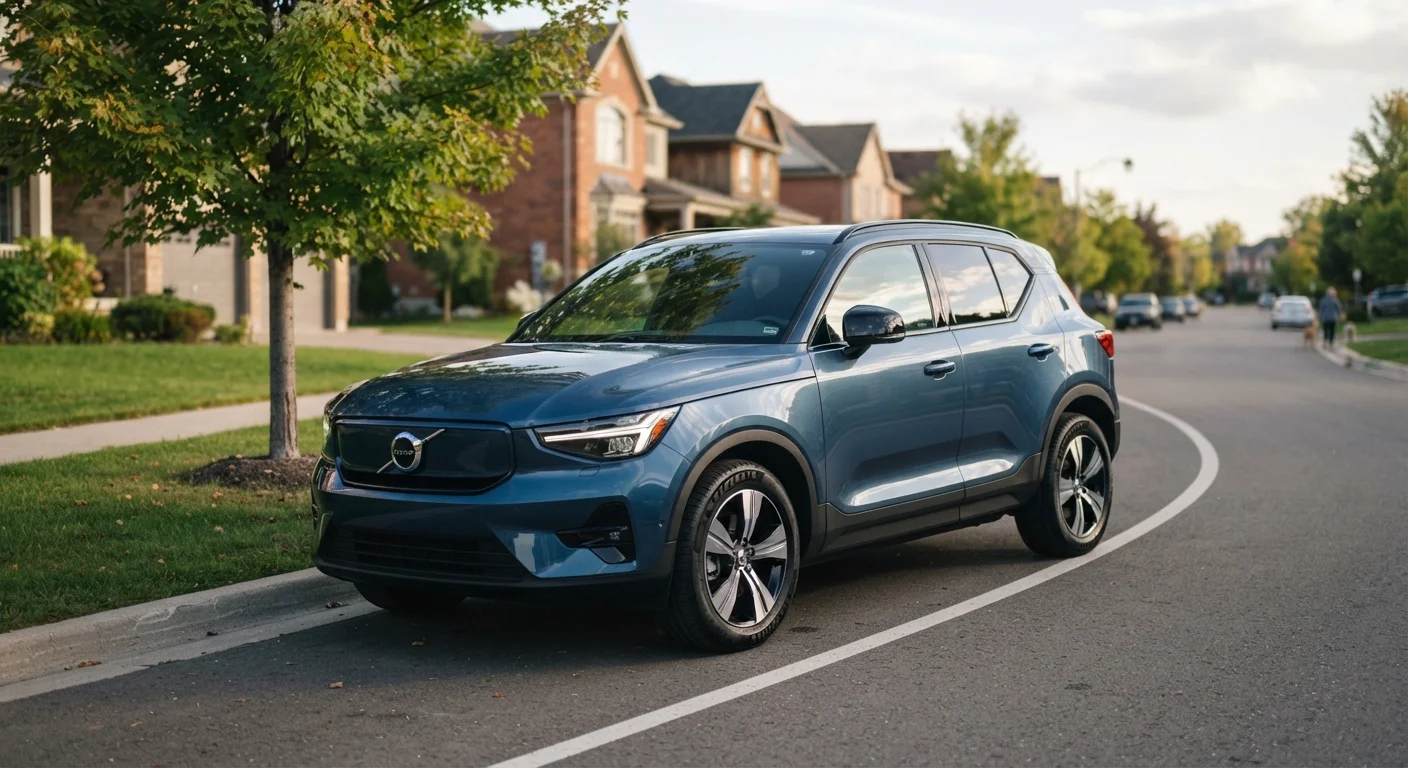
The Word 'Crossover' Has a Literal Meaning
The term exists because the vehicle itself crosses over two categories: it looks and sits like an SUV but is engineered like a car. That's not marketing language — it reflects a genuine structural choice made by engineers.
Traditional SUVs were built on truck frames, making them durable for towing and off-road use but heavy and somewhat uncomfortable on daily commutes. When automakers began adapting car platforms to produce taller, more spacious vehicles in the 1990s and 2000s, the result didn't fit neatly into existing labels. The term "crossover" stuck.
Understanding this distinction matters when you're shopping, because two vehicles sitting side by side on a dealer lot can look nearly identical while differing significantly in how they drive, how they handle rough terrain, and what they cost to own. For a broader look at how these classification systems work, segment vs. body style is worth reading before you finalize your shortlist.
Most 'SUVs' Are Actually Crossovers
Automakers and dealers frequently use the terms SUV and crossover interchangeably in marketing materials. When a vehicle is described as an SUV in a showroom, there's a strong chance it's built on a unibody car platform — making it technically a crossover. Checking the manufacturer's platform specifications will clarify the construction type if it matters for your use case.
Why the Market Shifted So Decisively Toward Crossovers
Consumer preferences in the US shifted away from sedans and minivans dramatically from the mid-2000s onward. Crossovers filled the gap with a combination of attributes that proved difficult to resist:
- Higher seating position — easier entry and exit, better sightlines for drivers
- Flexible cargo area — fold-flat rear seats offer far more utility than a sedan trunk
- Car-like fuel economy — unibody construction keeps weight down relative to body-on-frame rivals
- All-weather confidence — available AWD appeals to buyers in snow-prone regions
- Broad size range — subcompact crossovers fit city parking; three-row versions carry seven passengers
Automakers responded by converting much of their lineup. Several major manufacturers discontinued nearly all of their traditional sedans to focus production capacity on crossovers, reflecting where consumer demand had settled.
~58%
US new vehicle sales that are crossovers or SUVs
According to industry tracking data, crossovers and SUVs collectively account for well over half of all new passenger vehicles sold annually in the United States.
1990s
Decade the modern crossover concept emerged
Early unibody utility vehicles like the Toyota RAV4 and Honda CR-V, launched in the mid-1990s, established the template that now dominates the market.
What Crossovers Give Up
No vehicle type does everything well, and crossovers involve genuine trade-offs that buyers should weigh honestly.
Off-road capability is the clearest limitation. Most crossovers offer AWD tuned for rain and snow rather than rock crawling or deep mud. Ground clearance is typically modest. If genuine off-road use is on your agenda, a body-on-frame SUV or truck is a more appropriate starting point — the SUV vs. crossover comparison covers this in detail.
Towing capacity also tends to be lower than truck-based vehicles of similar size, though many midsize crossovers handle light trailer loads adequately for most buyers' needs.
Driving dynamics differ from sedans. A crossover's higher center of gravity means more body roll in corners compared to a low-slung car, though engineering advances have narrowed this gap considerably in recent years.
Test Drive on Your Actual Routes
A crossover that feels smooth at a dealership may behave differently on your regular highway commute or in the parking structure you use daily. Before committing, test drive the vehicle on roads that resemble your routine — including any tight turns, inclines, or parking challenges you regularly encounter. This is the fastest way to assess whether the ride height and visibility suit you personally.
Matching a Crossover to Your Lifestyle
The crossover category spans an enormous range, from small urban models to full-size three-row family vehicles. Narrowing down requires honest answers to a few questions:
- How many passengers do you regularly carry?
- Two-row crossovers work well for individuals and small families. Three-row options add flexibility but increase overall size and cost.
- What's your typical terrain?
- Mostly pavement and occasional snow or gravel? A standard front-wheel-drive crossover with optional AWD covers that. Regular backcountry driving warrants a different conversation.
- How much cargo do you need?
- A subcompact crossover offers more cargo room than most sedans, but significantly less than a midsize or full-size option. Measure your real-world gear before choosing a size class.
These decisions sit at the intersection of body style and vehicle segment — two distinct classification systems that shoppers often conflate. How the industry defines vehicle segments can help you interpret manufacturer labels more accurately. And if you're considering a used crossover, understanding how supply and demand shape pricing is equally important — see our guide on how used car pricing works.