
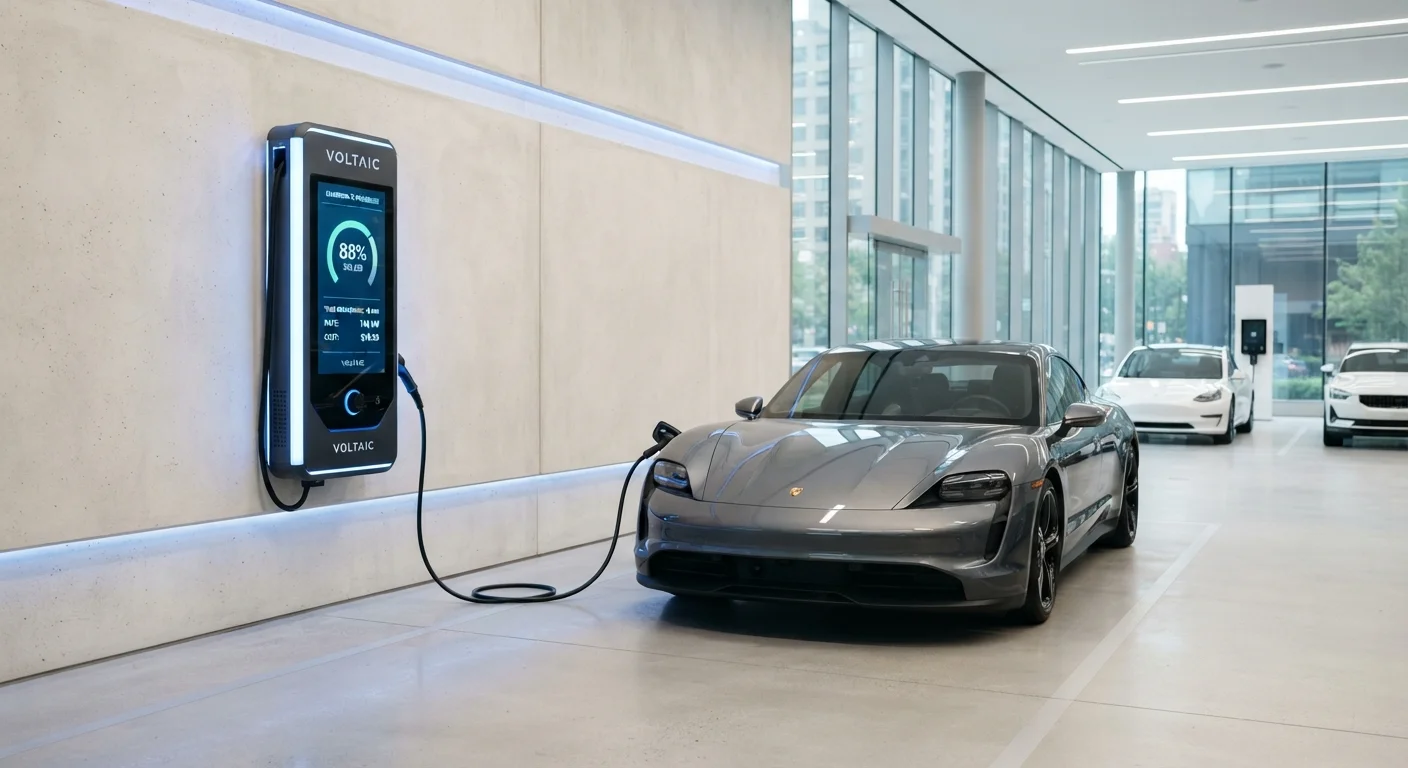
Why EV Jargon Matters Before You Shop
Walking into an EV showroom unprepared can feel like arriving at a foreign-language class without a dictionary. Salespeople move fast through terms like kWh, DC fast charging, and one-pedal driving — and a confused buyer is at a disadvantage. This plain-language reference decodes the terms you'll encounter most, so you can evaluate real-world fit rather than nod along politely.
For a deeper look at how these figures appear on a window sticker or spec sheet, see Making Sense of EV Specifications once you've built your vocabulary here.
| Primary energy unit | kWh (kilowatt-hour) |
| Range testing authority (US) | U.S. Environmental Protection Agency (EPA) |
| Home charging voltage (Level 2) | 240 volts AC |
| Fastest public charging type | DC Fast Charging (DCFC) |
| Recommended daily SoC range | 20%–80% for battery longevity (General manufacturer guidance; varies by model) |
| Tailpipe emissions | Zero (BEV) |
Core EV Terms Defined
The glossary below covers the terminology you'll encounter most often across manufacturer websites, EPA labels, and showroom conversations. Definitions are grouped by theme for easier scanning.
BEV (Battery Electric Vehicle)
A vehicle powered entirely by an electric motor drawing energy from an onboard battery pack. It has no internal combustion engine and produces zero tailpipe emissions.
kWh (Kilowatt-hour)
The unit used to measure battery capacity, similar to how gallons measure a fuel tank. A larger kWh figure generally means more stored energy and, all else equal, longer range.
EPA-Estimated Range
The driving range figure published by the U.S. Environmental Protection Agency based on standardized testing cycles. Real-world range typically differs based on temperature, speed, and driving style.
Usable Battery Capacity
The portion of a battery's total capacity the vehicle software allows drivers to access. Manufacturers reserve a buffer at both the top and bottom of the charge to protect battery longevity.
Level 1 Charging
Charging from a standard 120-volt household outlet using the cable supplied with most EVs. It is the slowest method, typically adding 3–5 miles of range per hour.
Level 2 Charging
Charging via a 240-volt source, most commonly a home wallbox or public station. Depending on the vehicle's on-board charger rating, Level 2 can add roughly 10–30 miles of range per hour.
DC Fast Charging (DCFC)
High-power charging that bypasses the on-board charger and delivers direct current straight to the battery. It can add significant range in 20–40 minutes but is not supported by every EV.
On-Board Charger (OBC)
A component inside the vehicle that converts alternating current (AC) from a wall outlet or Level 2 station into direct current (DC) the battery can store. Its kilowatt rating sets your maximum Level 2 charging speed.
Regenerative Braking
A system that converts the kinetic energy of deceleration back into electricity, partially recharging the battery. It also produces a distinctive slowing sensation when you lift off the accelerator.
One-Pedal Driving
A driving mode, available on many EVs, where strong regenerative braking is engaged automatically when you lift off the accelerator — allowing most routine stops without pressing the brake pedal.
Charging Connector Standard
The physical plug type used to connect a vehicle to a charging station. Common North American standards include CCS (Combined Charging System), CHAdeMO, and NACS (North American Charging Standard).
State of Charge (SoC)
The current charge level of an EV battery, expressed as a percentage from 0% (empty) to 100% (full). Most manufacturers recommend keeping daily SoC between roughly 20% and 80% for long-term battery health.
If you're weighing a plug-in hybrid rather than a fully electric vehicle, the Hybrid Glossary covers overlapping and distinct terms, including how PHEV specs differ from BEV specs. For powertrain terminology beyond the EV world, The Vocabulary of Powertrains is a useful companion.
Connector Standards Are Changing
The North American EV charging landscape has been shifting as more manufacturers adopt NACS (North American Charging Standard), originally developed by Tesla. Before purchasing, verify which connector standard your target vehicle uses and whether an adapter is available for your preferred charging network. Charging compatibility is a practical, not just technical, consideration.
Putting the Terms Together: Range, Charging, and Cost
These three topics — range, charging, and cost — are where vocabulary confusion most often leads buyers to poor decisions. A vehicle's EPA-estimated range is a controlled-test figure; real-world range depends on temperature, driving speed, climate-system use, and load. Understanding usable battery capacity (not gross capacity) is the more honest number to compare.
On charging: knowing the difference between Level 1, Level 2, and DC fast charging determines whether your home setup is adequate and how road trips will work in practice. Your vehicle's on-board charger rating, expressed in kilowatts (kW), caps how quickly it can accept Level 2 power regardless of how powerful the charging station is.
For a thorough breakdown of charging logistics and total ownership costs, the Charging & Costs hub is the logical next stop. And if you're curious about the driving feel — particularly how regenerative braking changes your relationship with the brake pedal — Regenerative Braking Explained walks through that adjustment in detail.
This article is for general informational and educational purposes only. Vehicle range, charging times, and costs vary by model, driving conditions, and region. Consult manufacturer specifications and a qualified adviser for decisions specific to your situation.