
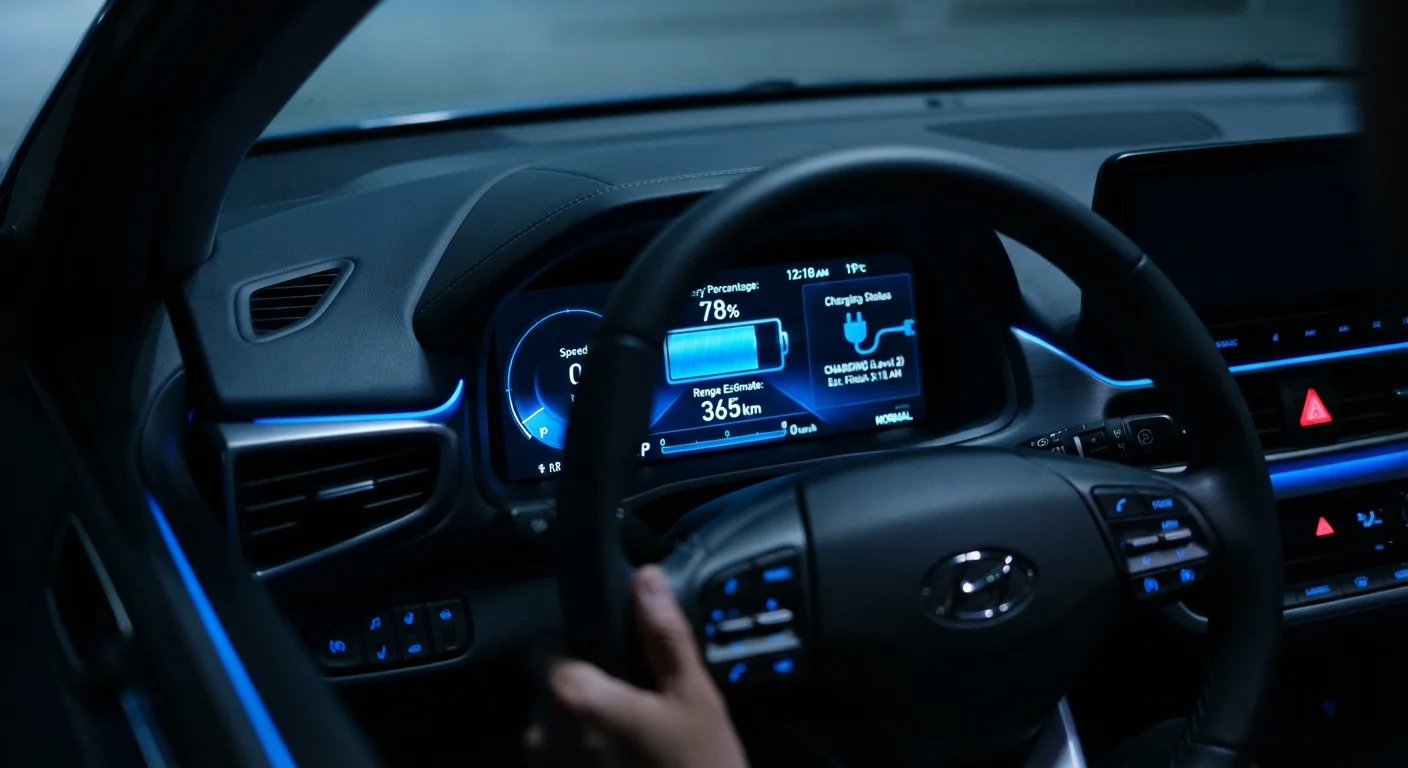
Why EV Spec Sheets Feel Overwhelming
Gasoline car shoppers have lived with horsepower and mpg for decades. EV spec sheets introduce a new layer of units — kilowatt-hours, kilowatts, miles per kilowatt-hour, on-board charger ratings — that can make a straightforward purchase feel like an engineering exam.
The good news: each figure answers one practical question. Once you know which question each number answers, the spec sheet becomes a decision-making tool rather than a source of confusion. This guide walks through every major EV specification in the order you're likely to encounter it, explains what it measures, and flags what it means for everyday ownership. For a broader look at how EVs work mechanically, see Electric Vehicles Explained.
Battery Capacity: kWh Explained
The battery pack's capacity is measured in kilowatt-hours (kWh) — the same unit on your home electricity bill. Think of it as the size of the fuel tank: a larger kWh figure generally means more energy stored and, all else equal, more driving range.
Manufacturers publish two related numbers. Gross capacity is the total energy the pack can hold. Usable capacity is what the vehicle's software actually allows you to draw on; the buffer kept in reserve protects long-term battery health. The gap is typically 5–10%. When comparing vehicles, focus on usable kWh — that is what determines real-world range.
5–10%
Typical buffer between gross and usable battery kWh
Manufacturers reserve a portion of total capacity to protect long-term battery health and cell longevity.
10–20%
How much higher WLTP range can be vs. EPA
The WLTP and EPA test cycles use different speed profiles and conditions, making direct comparison misleading for US buyers.
33.7 kWh
Energy equivalent of one gallon of gasoline (EPA basis)
The EPA uses this figure to calculate MPGe, enabling apples-to-apples efficiency comparisons between EVs and gasoline vehicles.
Battery chemistry and thermal management also affect how much capacity degrades over time, so a higher-kWh pack isn't automatically better if the thermal system is less sophisticated.
Range Ratings: EPA vs. WLTP
Two testing standards dominate EV range labels: the US EPA cycle and the European WLTP (Worldwide Harmonised Light Vehicles Test Procedure). If you're shopping in the United States, the EPA figure is the one to use.
WLTP ratings are typically 10–20% higher than EPA equivalents for the same vehicle, because the test cycles differ in speed profiles, temperature assumptions, and accessory loads. Seeing a European spec quoted on a US-focused review without that caveat is a common source of inflated expectations.
WLTP Figures Don't Apply to US Buyers
Some manufacturer websites and international reviews quote WLTP range rather than EPA range. For US driving conditions, always look for the EPA-estimated range label. Using the WLTP figure as a planning benchmark will likely lead to range expectations that don't match real-world results.
Neither figure is a guarantee. Real-world range depends on driving speed, climate, use of heating or air conditioning, and load. Highway driving at 75 mph will consistently return less range than the combined EPA estimate, while mild-weather city driving often exceeds it.
Power and Torque: kW, hp, and lb-ft
EV motors are rated in kilowatts (kW). To convert to the horsepower (hp) figure most US drivers know, multiply kW by approximately 1.341. A 150 kW motor produces roughly 201 hp.
Equally important is torque, measured in pound-feet (lb-ft). Electric motors deliver their full torque from a standstill — there's no rev range to climb through — which is why even modestly powered EVs often feel noticeably quick from a traffic-light stop. Don't evaluate an EV's everyday performance on power output alone; check the torque figure and the 0–60 mph time together for a complete picture.
When comparing two EVs with similar range, check the 0–60 mph time alongside torque output — an EV with lower horsepower but higher torque will often feel quicker in everyday merging and stop-and-go situations.
Electric motors deliver peak torque instantly, so the torque figure is a better predictor of real-world responsiveness than peak kW alone, particularly at city speeds.
Ask for the vehicle's 10%–80% DC fast-charging time, not the peak kW rate — the charging curve matters more than the headline number for estimating how long you'll spend at a public charger.
DC charging rates taper significantly as the battery approaches 80%, so a high peak rate doesn't always translate to the fastest overall session.
Charging Specs: On-Board Charger, AC, and DC
Charging specifications answer a distinct set of questions from range specs. The key figures are:
- On-board charger (OBC) output (kW): The component inside the car that converts AC grid power to the DC power the battery stores. A 7.2 kW OBC charges roughly twice as fast as a 3.7 kW unit on the same Level 2 station.
- Maximum DC fast-charging rate (kW): How quickly the vehicle accepts power from a DC fast charger (DCFC). This figure determines how many miles of range you can recover in 20–30 minutes on a public fast charger.
- Charging curve: EVs rarely sustain their peak DC rate for a full session. The rate typically tapers as the battery fills, which is why charge time estimates are often quoted from 10% to 80% rather than 0–100%.
For a detailed breakdown of charging levels, see EV Charging Explained. Broader ownership cost context is available in the Charging & Costs hub.
Match Your OBC to Your Home Charger
A vehicle with a 7.2 kW on-board charger paired with a 7.2 kW Level 2 home unit will charge at full speed. Installing a higher-output wall unit than your car's OBC can handle won't speed things up — the OBC is the bottleneck. Check both figures before investing in home charging hardware.
Efficiency: MPGe and kWh per 100 Miles
The EPA's MPGe (miles per gallon equivalent) rating translates electric efficiency into a gasoline frame of reference. The conversion is anchored to the energy content of one gallon of gasoline, set at 33.7 kWh. An EV rated at 100 MPGe uses electricity as efficiently as a gasoline car achieving 100 mpg — a useful comparison tool even if the underlying mechanics differ.
A complementary metric, kWh per 100 miles, shows the same information from the opposite direction: lower is more efficient. This figure is practical for estimating charging costs — multiply it by your local electricity rate (cents per kWh) to find the approximate cost per 100 miles driven.
If you're also evaluating hybrid options, the Hybrid Glossary covers equivalent efficiency terms you'll encounter on PHEV and HEV spec sheets.
Putting the Numbers Together
No single spec tells the whole story. A useful mental checklist when reading an EV spec sheet:
- Does the usable kWh support your typical weekly driving? Add up your average miles and divide by the EPA-rated efficiency to see how often you'd need to charge.
- Does the on-board charger match your home setup? A high-OBC vehicle paired with a capable Level 2 charger means shorter overnight charging windows.
- Is the DC fast-charging rate adequate for your road trips? Higher peak kW and a flatter charging curve mean shorter public charging stops.
- Do power and torque match your driving style? A high-torque, moderate-kW vehicle can feel faster in daily traffic than a high-kW, lower-torque one.
For plain-language definitions of any term you encounter beyond this guide, EV Terminology Every Driver Should Know is a useful companion. And if you're ready to think about what ownership actually feels like day-to-day, What Going Electric Actually Looks Like covers the practical realities beyond the spec sheet.
Specs Change with Software Updates
Several EV manufacturers have updated range estimates, charging limits, or performance figures through over-the-air software updates after vehicles shipped. The spec sheet you read at purchase may not reflect the vehicle's current capabilities — check the manufacturer's current documentation for the most accurate figures.
This article provides general educational information about electric vehicle specifications. Individual vehicle performance, range, and charging speeds vary by model, conditions, and usage. Always consult manufacturer documentation and, where relevant, a qualified adviser before making purchasing decisions.