
Why Hybrid Terminology Matters Before You Shop
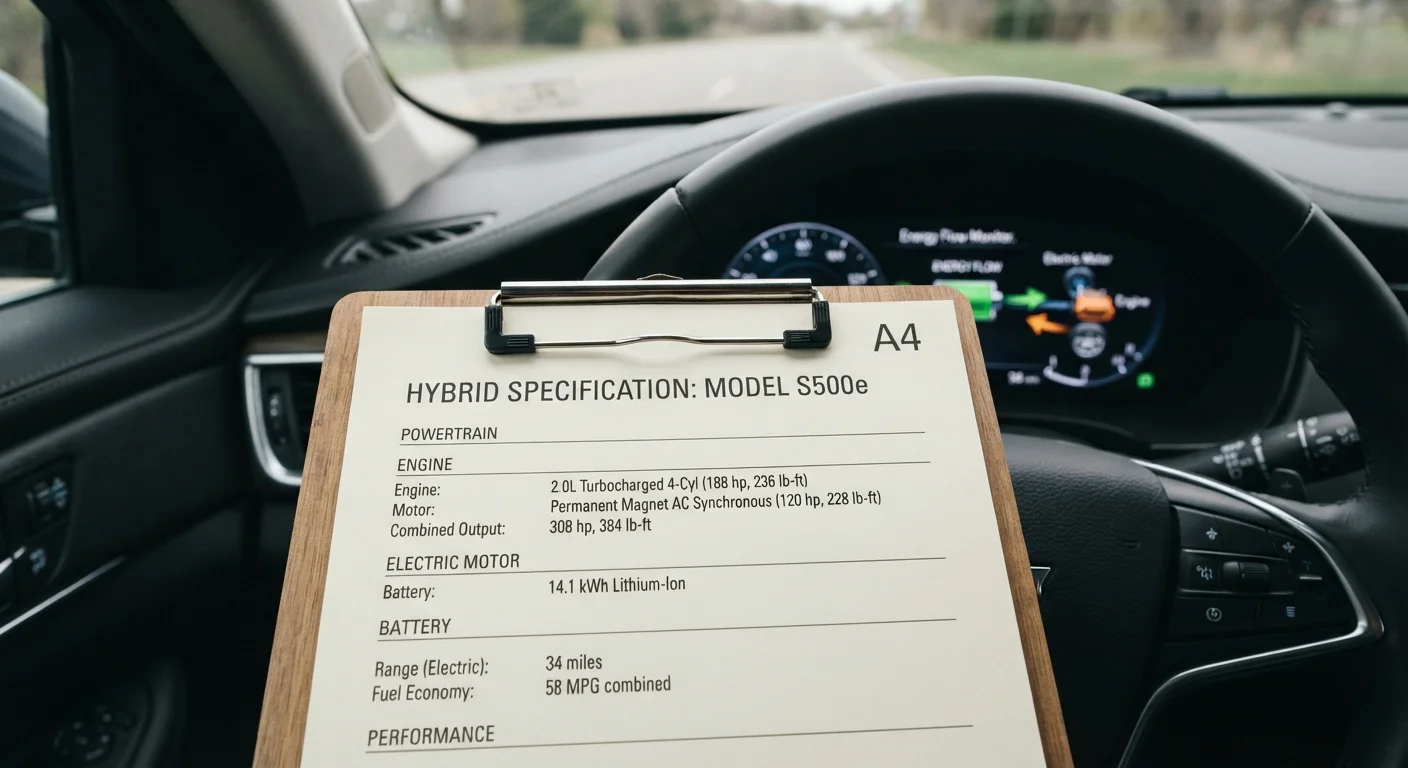
Walking into a dealership or opening a hybrid spec sheet without knowing the language puts you at an immediate disadvantage. Terms like PHEV, MPGe, and SoC appear on window stickers and comparison tools, yet they're rarely explained on the page. This glossary closes that gap so you can read a spec sheet the same way you'd read any other table of facts.
Hybrids occupy a wide spectrum — from mild-assist systems that never plug in to full plug-in hybrids with meaningful electric-only range. Understanding where a specific vehicle falls on that spectrum shapes decisions about daily charging habits, fuel costs, and which incentives, if any, you might qualify for. For a broader look at powertrain categories beyond hybrids, see the complete powertrain vocabulary guide.
| Typical PHEV All-Electric Range | 20–50 miles (EPA vehicle ratings database) |
| Energy in 1 Gallon of Gasoline | 33.7 kWh (U.S. EPA MPGe definition) |
| Common HEV Battery Pack Size | 1–2 kWh usable (Typical manufacturer specifications) |
| Common PHEV Battery Pack Size | 8–20 kWh usable (Typical manufacturer specifications) |
| Regenerative Braking Energy Recovery | Up to ~70% of braking energy (Engineering estimates vary by system) |
Core Hybrid Terms Defined
The definitions below cover the terms you'll encounter most often on spec sheets, in EPA listings, and in manufacturer marketing materials. They're organized from the most fundamental concepts outward.
If you're also evaluating a fully electric vehicle alongside a hybrid, the terminology overlaps in some areas but diverges in others — particularly around charging infrastructure and range anxiety. The EV terminology guide covers that vocabulary in parallel depth.
EPA Ratings Are Test-Condition Estimates
All EPA fuel economy and all-electric range figures are produced under standardized laboratory conditions. Real-world results vary based on driving speed, climate, air conditioning use, and terrain. Use EPA numbers as a comparison benchmark, not a guarantee of what you'll experience.
PHEV vs. HEV: Which Label Matters More?
The difference between a PHEV and a standard HEV is more than a plug — it affects your daily routine, home charging needs, and potential tax credit eligibility. PHEVs may qualify for federal incentives that HEVs do not. Consult a qualified tax professional to understand how credits apply to your specific situation.
Once you're comfortable with these terms, the next step is seeing how they connect in practice. How a Hybrid Powertrain Actually Works explains the real-world interplay between the engine, motor, and battery during everyday driving. For a complete ownership perspective — from purchase through long-term running costs — the complete hybrid decision-making resource pulls everything together in one place.