
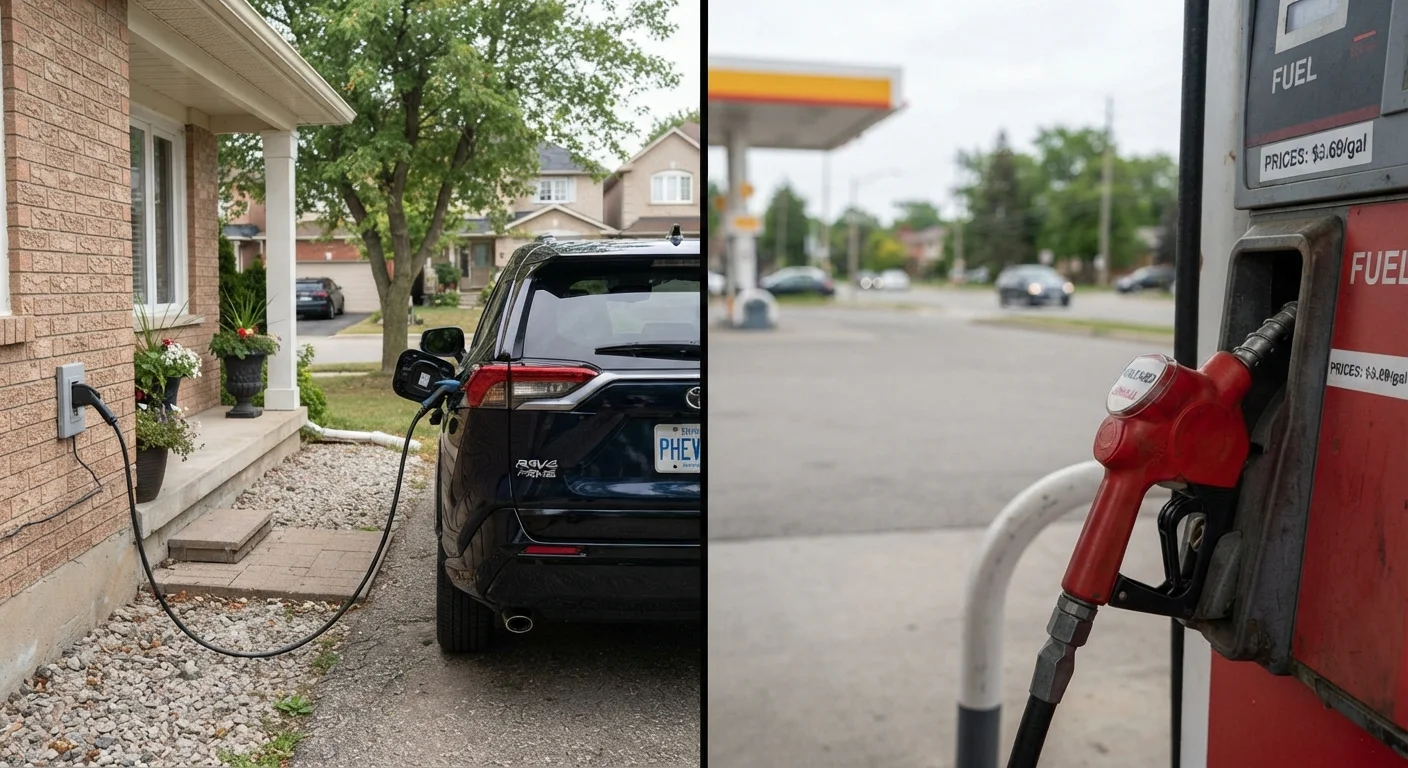
How the EPA Tests PHEVs — and Why It Creates a Gap
The EPA's fuel economy methodology for plug-in hybrids is designed to reflect a driver who charges regularly. Each test cycle begins with a fully charged battery, and the resulting combined figure — expressed in MPGe (miles per gallon equivalent) — blends electric and gasoline miles using a formula called the utility factor, which estimates how often a typical driver would have a charged battery available.
The problem is that this utility factor is a statistical average, not your personal driving pattern. If you charge before most trips, the number is a reasonable guide. If you rarely plug in, you're essentially driving a heavier-than-normal gasoline car, and the official figure becomes almost meaningless as a prediction of your fuel bill.
For a broader look at how this dynamic compares to conventional hybrids, see full hybrid vs. plug-in hybrid differences.
Official Figures Assume Frequent Charging
EPA PHEV ratings are calculated using a methodology that weights electric miles heavily, assuming the battery is charged before most trips. If your daily routine doesn't include regular charging — at home or at work — your actual fuel economy can be dramatically lower than the window sticker suggests. Treat the advertised figure as a best-case ceiling, not a reliable average.
The Five Mistakes That Distort Your Real-World PHEV Efficiency
Most of the gap between advertised and actual PHEV efficiency comes down to a handful of predictable, avoidable errors. Understanding them before you buy — or before you set expectations for a vehicle you already own — makes the difference between satisfaction and disappointment.
Treating the EPA-rated MPG figure as the number you'll actually see at the pump.
Why it happens: The label number is eye-catching and simple. Buyers naturally assume it reflects average use, but the EPA test protocol starts each cycle with a full battery charge — a condition many owners never consistently replicate.
Ignoring how daily commute distance compares to the vehicle's electric-only range.
Why it happens: Buyers focus on the total combined range rather than asking how far the car can travel purely on electricity. A PHEV with 25 miles of electric range returns very different results for a 15-mile commuter versus a 60-mile one.
Assuming highway driving will deliver the same efficiency gains as city driving.
Why it happens: Hybrid systems are widely associated with fuel savings, so buyers expect the efficiency advantage to hold everywhere. In practice, sustained high-speed driving depletes the battery quickly and offers fewer opportunities for regenerative braking.
Overlooking the weight and aerodynamic drag added by the dual powertrain system.
Why it happens: PHEVs carry both a combustion engine and a larger battery pack than a standard hybrid, making them heavier than comparable non-electrified vehicles. That weight penalty is rarely front of mind when reading efficiency labels.
Skipping regular charging because it feels inconvenient or unnecessary.
Why it happens: Some buyers purchase a PHEV for its fuel economy label without fully committing to the charging habit that makes the label meaningful. Without home charging infrastructure in place, plugging in becomes an afterthought.
Cold Weather Shrinks Electric Range Fast
Lithium-ion battery packs in PHEVs lose meaningful capacity in cold temperatures, sometimes reducing electric-only range by 30–40% in winter conditions. This means the combustion engine activates earlier and more often during cold months, pushing fuel consumption well above the rated figure. Buyers in northern climates should factor this seasonal penalty into their efficiency expectations before purchase.
Real-world PHEV ownership rewards drivers who treat the vehicle as the plug-in device it is. Those who skip that step are essentially paying for technology they aren't using. The PHEV ownership experience guide walks through both the advantages and the genuine trade-offs in more detail.
It's also worth noting that PHEVs aren't alone in this gap — fully electric vehicles face a similar real-world range shortfall driven by temperature, speed, and load factors.
Matching a PHEV to Your Actual Driving Pattern
The most useful question a PHEV buyer can ask is simple: how does my daily mileage compare to this vehicle's electric-only range? If most days fall within that window and you can charge overnight, a PHEV can genuinely approach its advertised efficiency. If your commute is long, your charging access is limited, or you travel frequently at highway speeds, the math shifts considerably.
For buyers weighing whether a PHEV or a conventional hybrid is the better fit, a side-by-side comparison of hybrid architectures covers range, cost, and usability in practical terms. And if you want to understand how fuel costs differ between self-charging and plug-in models across real driving patterns, this breakdown of daily fuel cost differences is a useful reference.
The core takeaway: a PHEV is a capable and efficient vehicle — but only when used the way it was designed to be used. Approach the window sticker as a tool for comparison, not a guarantee of outcomes.