
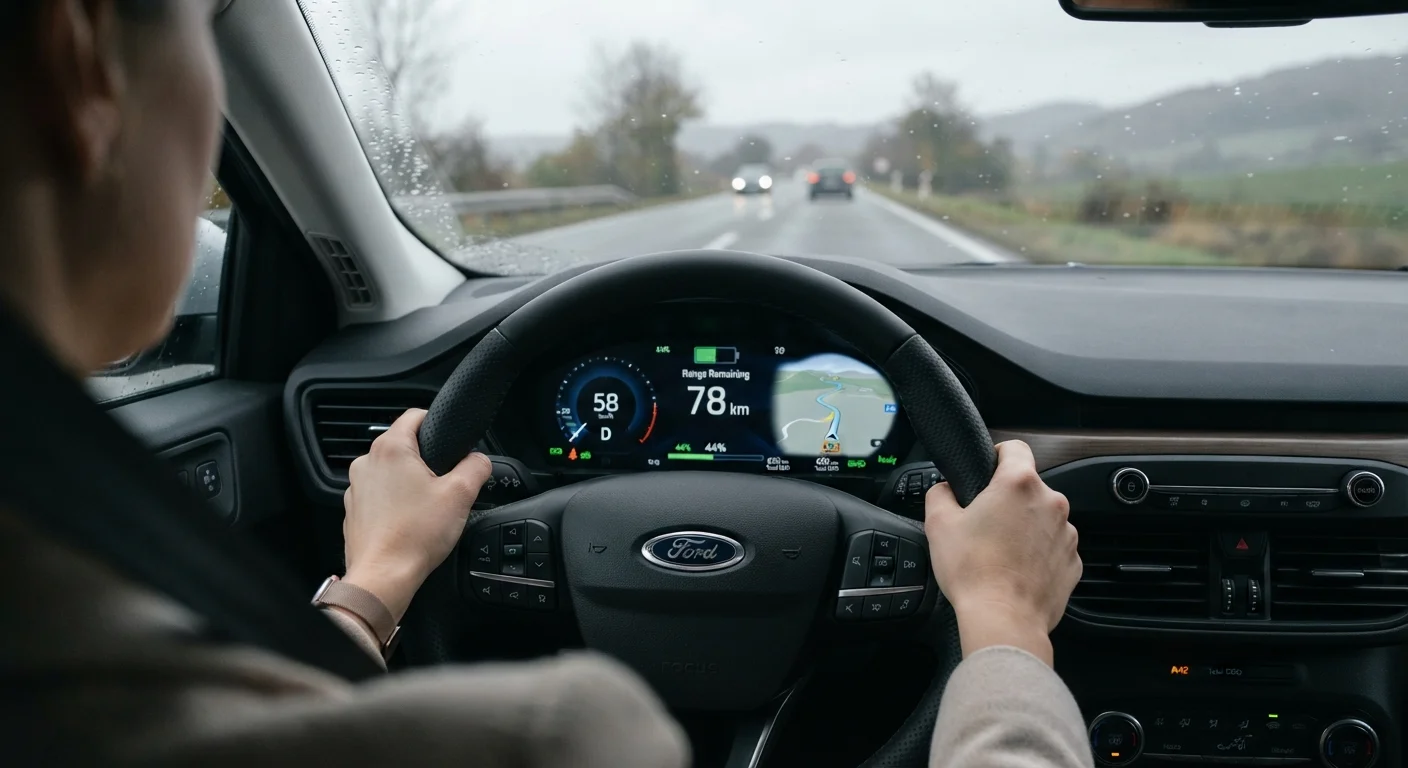
Where the Official Range Number Comes From
Every new EV sold in the U.S. carries an EPA-estimated range on its window sticker. That number comes from a standardized dynamometer test — essentially a treadmill for vehicles — conducted in a controlled lab environment. The test cycles simulate a mix of city and highway driving at moderate speeds and mild temperatures, typically around 75°F, without running the heater or air conditioner at full blast.
The result is a useful benchmark for comparing one model to another, but it was never designed to predict exactly how far you will drive on a charge. Real roads, real weather, and real driving habits introduce variables the lab simply doesn't capture. For a deeper look at how the window sticker number is constructed, see what the numbers on the window sticker actually mean.
Myth
If an EV is rated for 300 miles, I can plan trips around 300 miles between charges.
Fact
The EPA rating is a laboratory baseline. Real-world range typically runs 10–30% lower depending on conditions.
The EPA test is a standardized comparison tool, not a travel guarantee. Factors like cold air, highway speeds, and heavy loads routinely reduce usable range below the rated figure. Prudent planning means building in a buffer — most experienced EV drivers treat the sticker number as an upper bound under ideal conditions.
Myth
Cold weather only has a minor effect on EV range — maybe 5 or 10 miles.
Fact
In freezing temperatures, EV range can drop 20–40%, a reduction of 60–120 miles on a 300-mile-rated vehicle.
Battery chemistry slows in cold, and resistance heating for the cabin draws directly from the traction battery. This double effect is significant. Pre-conditioning the cabin while plugged in — warming the interior before you leave home — is one of the most effective ways to reclaim range lost to cabin heating demands.
Myth
Highway driving gives you better range because you're moving steadily without stop-and-go.
Fact
Highway driving at higher speeds actually reduces EV range, unlike the benefit it provides in fuel-efficient combustion engines.
Internal combustion engines are inefficient at low-speed idling, so steady highway cruising often improves their efficiency. EVs work the opposite way: regenerative braking recovers energy in stop-and-go traffic, while aerodynamic drag at highway speeds increases energy consumption substantially. An EV often goes farther on a charge in city driving than on the highway.
Myth
The range display on the dashboard gives me an accurate, real-time count I can rely on precisely.
Fact
Dashboard range estimates are projections based on recent driving patterns and can shift significantly as conditions change.
The range figure shown on an EV's instrument cluster is a rolling estimate — it factors in recent energy consumption, temperature, and state of charge. A sudden climb, a burst of acceleration, or a drop in temperature can cause the number to fall faster than miles are actually covered. Treat it as a guide, not a precise countdown.
Myth
Using the heater or air conditioner only takes a small amount of power from the battery.
Fact
Climate control can be one of the largest single draws on an EV battery, particularly resistance-based heating in winter.
A conventional resistance heater can draw 3–5 kilowatts continuously — equivalent to a meaningful fraction of total pack power on a smaller battery vehicle. At that rate, cabin heating alone could consume the energy equivalent of 10–15 miles of range per hour. Heat pump systems are more efficient but still represent a real and measurable load.
The Biggest Real-World Factors Eating Your Range
Once you understand that the EPA figure is a controlled baseline, the gap to real-world results becomes predictable — and manageable. Three forces account for most of the shortfall.
20–40%
Range loss in very cold weather
AAA testing has found EV range can fall by this margin when ambient temperatures drop well below freezing and cabin heating is active.
~2×
Energy per mile at 80 mph vs. 55 mph
Aerodynamic drag increases with the square of speed, roughly doubling the energy cost per mile at typical interstate speeds versus moderate highway driving.
70–80%
Practical usable range as a planning buffer
Experienced EV drivers commonly plan around 70–80% of the EPA-rated range to account for real-world variables and maintain a comfortable state-of-charge buffer.
Temperature is the most dramatic factor. Lithium-ion batteries produce and accept charge most efficiently between roughly 60°F and 80°F. Below freezing, the electrochemical reactions slow, reducing usable capacity. The cabin heater in most EVs is a resistance element — essentially a large electric toaster — that draws continuous power from the same pack powering the wheels. The AAA has conducted testing showing range can fall 20–40% in very cold conditions. Heat pump systems, available on many newer models, reduce that penalty but don't eliminate it.
Speed has an outsized effect because aerodynamic drag rises with the square of velocity. Driving at 80 mph demands roughly twice the energy per mile compared to 55 mph. Most EPA tests are weighted toward lower speeds, so a driver who primarily uses highways can expect noticeably less range than the sticker suggests.
Load and accessories matter more than many buyers anticipate. A full car of passengers, roof-mounted cargo, or a trailer adds rolling resistance and aerodynamic drag. Running the defroster, seat heaters, and audio system simultaneously draws additional watts. None of these are catastrophic individually, but combined they compound. For a comprehensive breakdown, factors that shape EV range in the real world walks through each variable with practical management tips.
Don't Run the Pack to Zero
Consistently draining an EV battery to a very low state of charge — especially in cold weather — can leave you stranded unexpectedly, since the usable capacity shrinks further as the pack cools. Most manufacturers recommend keeping the battery above 10–20% in normal use. Planning stops before the gauge approaches empty gives you a safety margin when real-world range falls short of the estimate.
Setting Realistic Expectations Before You Buy
Treating the EPA estimate as a ceiling rather than a floor is the most practical mindset shift a prospective EV buyer can make. A common rule of thumb among experienced EV drivers is to plan around 70–80% of the rated range for everyday use, and somewhat less during winter months or sustained highway travel.
This doesn't mean EV ownership is impractical — it means planning charging around realistic numbers rather than the sticker figure. Many drivers find their regular commute and errands fall well within a comfortable buffer, so they charge at home overnight without ever approaching the vehicle's limit. Those with longer or more demanding routes benefit from mapping charger locations along their typical corridors before purchase.
It's also worth noting that this kind of rated-vs-real gap isn't unique to EVs. Plug-in hybrids face a similar dynamic with their official fuel economy figures, as explained in why PHEV fuel economy figures often don't match real-world results. And for a broader look at EV misconceptions, persistent EV myths that keep putting buyers off examines the evidence behind the most common concerns.
Range Estimates Are Not Warranties
No manufacturer or regulatory body guarantees that a vehicle will achieve its EPA-rated range under your specific driving conditions. Official figures are standardized comparison benchmarks. Before purchasing, use the EPA's own fuel economy data tools to compare models, and look for independent real-world range testing from automotive testing organizations to get a fuller picture of what to expect.