
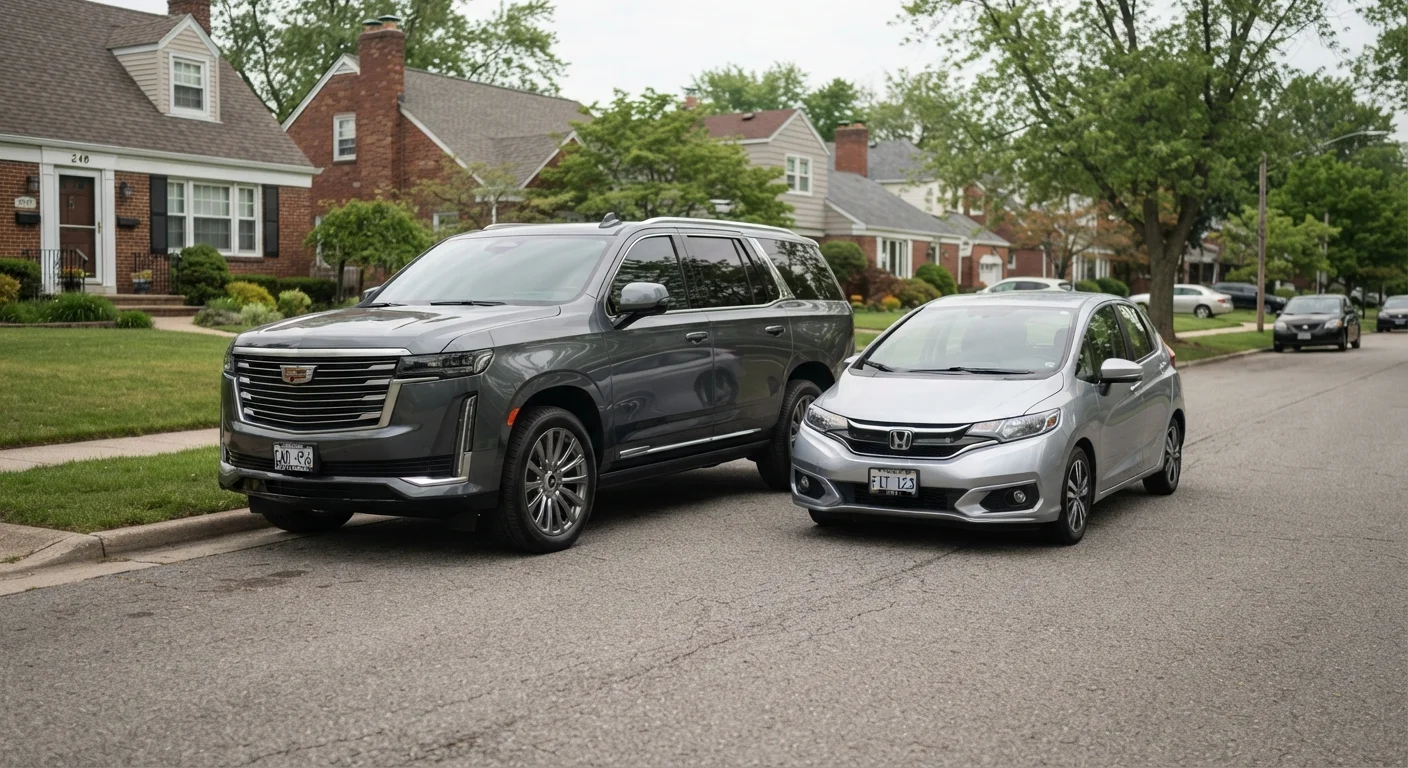
What 'Top of a Segment' Actually Means
Every vehicle segment — compact, midsize, full-size — has an upper boundary. Buying at the top of a segment means choosing the largest or most capable configuration before crossing into the next class up. For example, a three-row midsize SUV sits at the ceiling of its segment, offering near-full-size utility without a full-size price tag or footprint.
It's worth understanding how those boundaries are drawn before assuming bigger automatically means better. Industry classifications don't always match shopper intuition — see our explainer on how segment definitions work in practice for the full picture. And because segment creep has gradually expanded vehicle dimensions, today's top-of-segment model is often physically larger than a same-class vehicle from a decade ago.
Maximum interior space within the price tier
Top-of-segment vehicles deliver the most passenger and cargo room before requiring a step up in class — and price. This can represent strong value per cubic foot compared to crossing into the next segment entirely.
Greater towing and payload capability
Larger platforms within a segment typically carry higher tow ratings and payload limits, which matters for buyers who haul trailers, boats, or equipment on a regular basis.
More standard safety and tech features
Automakers frequently load top-of-segment configurations with more advanced driver-assistance systems and connectivity features, since buyers at this level tend to expect a more complete package.
Closer competition with entry-level luxury
A well-equipped top-of-mainstream-segment vehicle can match or exceed the feature set of an entry-level luxury model, sometimes at a lower total cost of ownership.
Better long-haul comfort for passengers
Longer wheelbases and additional seating rows typical of top-of-segment configurations generally translate to improved ride comfort on extended trips, especially for rear-seat passengers.
The Real Costs of Going Larger
The financial case against buying at the top of a segment goes beyond the sticker price. Larger vehicles generally consume more fuel — a gap that compounds over years of ownership, not just fill-ups. Insurance premiums tend to track vehicle size and replacement cost, and tire and brake replacements on heavier platforms typically cost more per service visit.
15–20%
Typical fuel economy penalty for full-size vs. midsize SUVs
EPA combined ratings generally show a 15–20% gap between comparable midsize and full-size SUV configurations, depending on powertrain.
3–5 rows
Seating configurations at top of segment
Three-row configurations are a defining feature of top-of-segment SUVs, offering up to eight seats versus five in most mid-segment models.
Depreciation deserves particular attention. Vehicles at the upper edge of a segment sometimes depreciate faster than their mid-segment counterparts because they appeal to a narrower pool of used-car buyers. If resale value matters to your ownership strategy, that dynamic is worth weighing carefully — our article on depreciation resistance explores the trade-offs in detail.
Higher fuel consumption across all driving
Larger, heavier vehicles burn more fuel whether you're on the highway or running local errands. This cost is persistent and grows with fuel prices over time.
Parking and maneuverability challenges
Full-size configurations can be genuinely difficult to manage in urban parking garages, tight lots, and narrow streets — a daily friction point that smaller-segment buyers rarely experience.
Higher insurance and maintenance costs
Heavier platforms typically cost more to insure due to higher replacement values, and consumables like tires and brakes are often more expensive on larger vehicles.
Steeper depreciation risk in some segments
Top-of-segment vehicles can depreciate faster than mid-range models because the used-car buyer pool for maximum-size configurations is proportionally smaller.
Space often goes underutilized
Many buyers who choose maximum-capacity vehicles report using the full seating or cargo capacity only occasionally, meaning they absorb the ongoing costs without regular access to the benefit.
Matching Vehicle Size to Real-World Use
The strongest argument for buying at the top of a segment is genuine utility: more seating rows, greater towing capacity, and additional cargo volume are meaningful advantages when your lifestyle actually requires them. Families with multiple children, buyers who trailer boats or campers, and those who routinely need to transport large gear all have legitimate reasons to size up.
The caution is proportionality. Research consistently suggests many buyers overestimate how often they'll use maximum capacity. A vehicle that spends most of its life carrying two people but was sized for seven will deliver those extra costs every day while delivering the extra space rarely. Before committing, it helps to audit a typical month of trips rather than planning around the occasional outlier.
Understanding how trim-level packaging interacts with segment positioning also matters — trim structure across a lineup affects which features actually reach which configurations. And if you're weighing whether a mainstream top-of-segment model competes with entry-level luxury, what you're actually paying for across tiers breaks that down clearly.
Segment Position vs. Trim Level: Two Different Choices
Buying at the top of a segment (choosing a larger vehicle class) is a separate decision from buying the highest trim level within a model line. You can purchase a base-trim full-size SUV or a top-trim compact — these involve different trade-offs. When planning your budget, it helps to separate these two variables and evaluate them independently before combining them.