
The Purchase Price: Starting Higher, But Not Always Ending There
The sticker price of most battery electric vehicles (BEVs) still sits above comparable gas-powered alternatives. However, the federal Clean Vehicle Credit — up to $7,500 for qualifying new EVs purchased after the Inflation Reduction Act's rules took effect — can substantially close that gap. Some states layer additional rebates on top. Eligibility depends on vehicle price caps, buyer income limits, and where the vehicle is assembled, so it's worth verifying your specific situation before factoring any credit into your budget.
For a fuller picture of how purchase price compares to ongoing costs across vehicle types, see what new car ownership actually costs over five years.
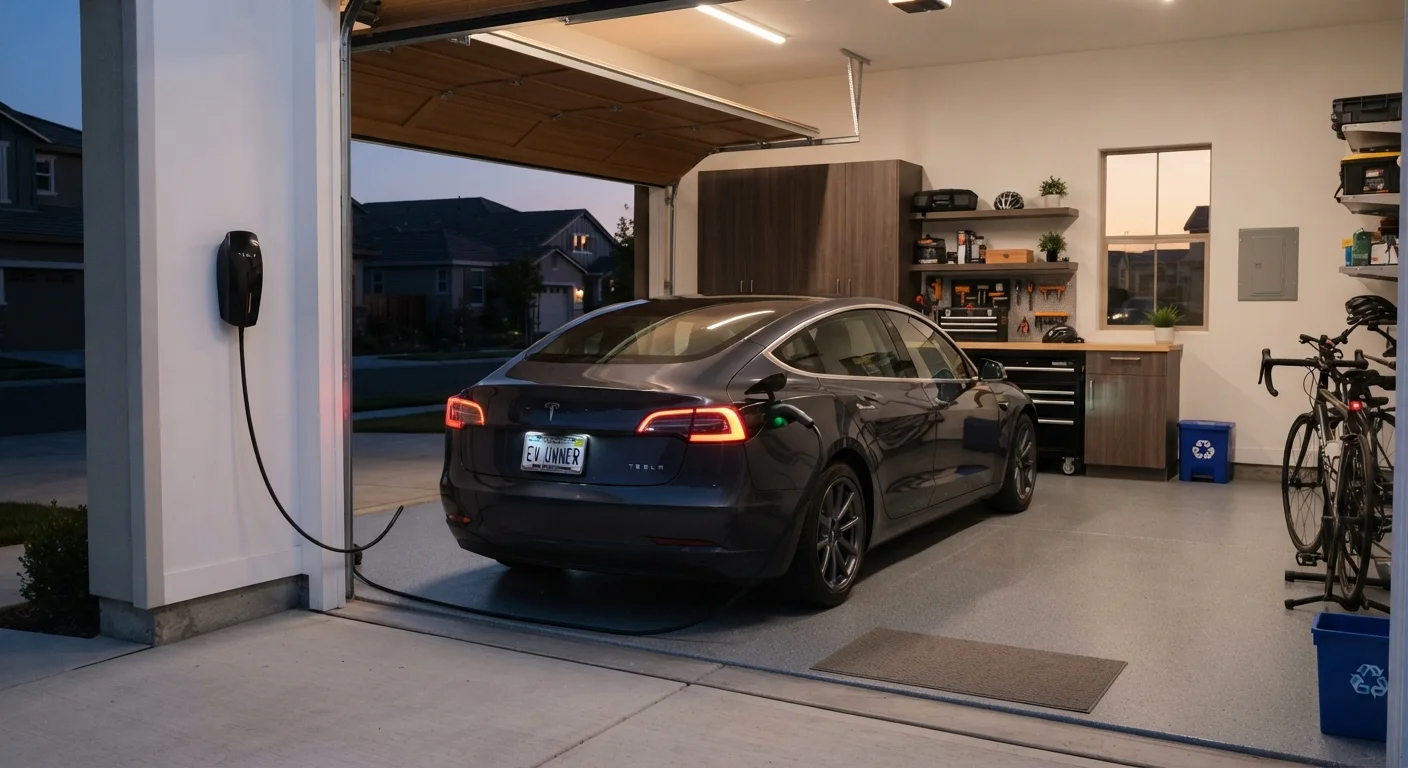
Lower per-mile energy cost with home charging
Charging at home on standard off-peak rates typically costs significantly less per mile than gasoline across most U.S. states, according to the Department of Energy's eGallon comparisons.
Reduced routine maintenance expenses
No oil changes, fewer brake jobs, and no exhaust system service translate to lower annual maintenance bills — AAA and Consumer Reports data suggest EV owners save hundreds of dollars per year on routine upkeep.
Federal and state purchase incentives available
Qualifying buyers can claim up to $7,500 in federal Clean Vehicle Credits, with some states adding further rebates that meaningfully offset the higher purchase price.
Simpler drivetrain with fewer wear components
Fewer moving parts than an internal combustion engine means fewer failure points over time, which can contribute to lower unplanned repair costs during the ownership window.
Charging vs. Fueling: Where EVs Often Win
Electricity is generally cheaper per mile than gasoline. The U.S. Department of Energy's eGallon metric — which calculates the cost of driving on electricity versus a gallon of gas — has consistently shown electricity as the lower-cost option in most states. Drivers who charge primarily at home overnight on standard rates often see per-mile energy costs roughly half those of a fuel-efficient gas car.
Public DC fast charging changes the calculation. Network pricing varies widely, and frequent highway charging using paid public stations can erode much of the per-mile savings. Understanding your charging mix is essential. Explore the broader picture of EV charging logistics and real ownership costs to model your own usage patterns.
~$0.03–$0.05
Estimated per-mile home charging cost
The U.S. Department of Energy's eGallon data indicate home EV charging typically costs between three and five cents per mile depending on local electricity rates.
$1,000+
Estimated annual maintenance savings vs. gas car
Consumer Reports research has found EV owners spend roughly half as much on maintenance and repair as owners of gas-powered vehicles over comparable ownership periods.
Maintenance: Fewer Moving Parts, Lower Routine Bills
EVs eliminate several of the most frequent gas-car service items: oil changes, spark plugs, transmission fluid, and exhaust system repairs. Brake wear also tends to be lower due to regenerative braking, which recovers kinetic energy rather than converting it to heat. Consumer Reports and AAA data both suggest EV owners spend meaningfully less annually on scheduled maintenance than gas-vehicle owners.
That said, EVs are not maintenance-free. Tires wear at a comparable or slightly faster rate due to vehicle weight and instant torque. Cabin air filters, wiper blades, and coolant (used in battery thermal management) still require attention. Battery replacement outside warranty is rare in the five-year window but represents a significant potential cost if it occurs.
Higher upfront purchase price than gas equivalents
Even with available incentives, most EVs carry a sticker premium over comparable gas-powered vehicles, requiring a longer ownership horizon to recoup through fuel and maintenance savings.
Insurance premiums typically run higher
Specialized repair costs — particularly for battery packs and advanced electronics — push EV insurance rates above those for comparable conventional vehicles, partially offsetting maintenance savings.
Depreciation is less predictable in a fast-moving market
As new models with greater range enter the market rapidly, older EVs can depreciate more steeply than expected, making five-year residual value harder to forecast than for established gas-vehicle segments.
Public fast-charging costs can erode fuel savings
Drivers without reliable home charging who depend on paid DC fast-charging networks may pay per-mile energy costs comparable to or exceeding those of a fuel-efficient gas vehicle.
Insurance and Depreciation: The Less Predictable Costs
EV insurance premiums are, on average, higher than those for comparable gas vehicles. Repair costs drive this — EV components, particularly battery packs and specialized electronics, cost more to replace after a collision. The gap varies considerably by insurer and model, so comparing multiple quotes is worthwhile. For context on how insurance fits into the full ownership cost picture, review the recurring fees and insurance costs that shape what you really pay.
Depreciation is where EV cost projections become genuinely uncertain. Some models have depreciated steeply as newer, longer-range alternatives entered the market. Others have held value well. Five-year residual values are difficult to predict in a market evolving this quickly, and depreciation typically represents the single largest component of total ownership cost for any new vehicle. Leasing versus buying outright is worth considering precisely because leasing can shift depreciation risk to the lessor.
Battery Warranty Provides Some Cost Protection
Federal regulations require automakers to warranty EV battery packs for at least eight years or 100,000 miles, whichever comes first. This means battery replacement costs — the largest potential EV repair expense — are generally covered within the five-year ownership window. Review your specific vehicle's warranty terms, as coverage levels and conditions vary by manufacturer.
Putting It All Together: Is the Five-Year Math Favorable?
Whether EV ownership costs less over five years than a gas equivalent depends on several personal variables: purchase incentive eligibility, home charging access, annual mileage, local electricity rates, and the specific models being compared. A high-mileage driver with home charging and a qualifying federal credit may see clear savings. A lower-mileage driver relying on public charging may not. A grounded look at daily EV life can help you assess whether the practical realities fit your routine before committing. For a detailed cost comparison alongside conventional vehicle ownership, the full picture of ongoing car ownership costs provides useful benchmarks.
This article is for general informational purposes only. Costs, incentive eligibility, and vehicle availability change over time. Consult a financial adviser or tax professional regarding your specific circumstances before making a purchase decision.